
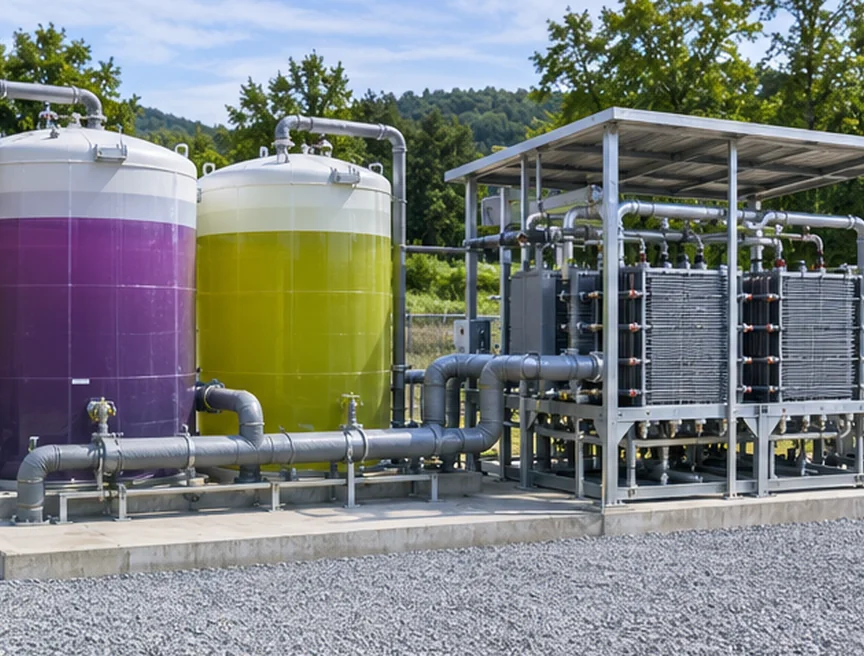
A flow battery can keep its energy-storing chemicals dissolved in liquids. Those liquids sit in tanks and are pumped through a stack of cells. Inside the stack, the liquids take part in reactions that let the battery absorb energy during charging or supply electricity when it discharges.
Why split that equipment into tanks and a stack?
The amount of liquid helps determine how much energy can be stored. The size of the stack helps determine how fast the battery can deliver it. In many designs, larger tanks can add operating time without requiring a larger power stack.
What are the pumps doing?
The pumps move the liquids where the reactions happen and back to the tanks. Running the pumps takes some energy. The tanks, piping, and controls are part of the system along with the battery cells.
For more on how utility batteries store energy and deliver power, see Battery Storage & Grid Integration.