
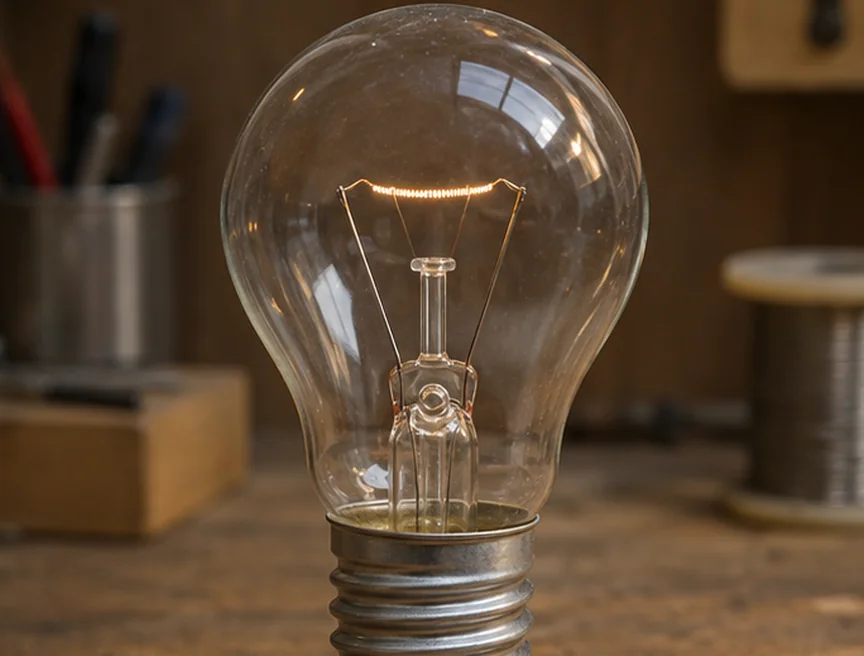
An incandescent bulb’s filament has much less resistance when it’s cold. Flip the switch and for a brief moment it draws more current than it will once it’s glowing. If the filament is already worn thin, that quick heating can be the last thing it has to do.
What wears a filament out?
Incandescent bulbs make light by getting a fine tungsten wire very hot. Over time, a little tungsten leaves the filament. Some of it can collect on the inside of the glass and make it look darker. Where the wire has become thin, that spot runs hotter and can eventually break.
Why does it happen right at the switch?
Think of turning a cold wire into a glowing wire almost instantly. The sudden surge of current and rapid heating put extra stress on a filament that might already be close to breaking. That’s why the bulb can look fine one night and give you a tiny flash the next morning.
For more on current, resistance, and how electrical loads use power, see Basics of Electric Utilities 101.