
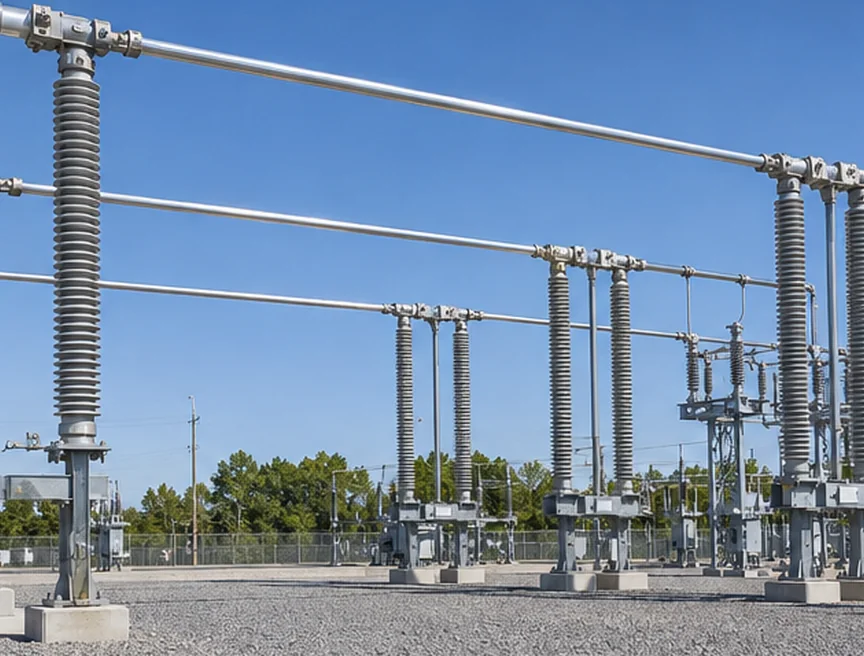
Air usually keeps one conductor electrically separate from another. Put enough voltage across a small enough air gap and the air can start to conduct. That’s how electricity can jump a gap even though there’s no wire connecting the parts.
Why allow more room than normal operation needs?
A line can see short surges from lightning or switching. The equipment and its spacing have to stand up to the voltages the station is designed to see. The shape of the metal matters too. A sharp point can create a stronger electric field nearby than a smooth rounded part.
Is the gap just between wires?
There also has to be clearance from live parts to grounded steel and to the ground itself. And the working space people need is a separate consideration. That’s a big reason an outdoor station can cover so much land.
For more on voltage and how substations use insulation, see Basics of Electric Utilities 101.