
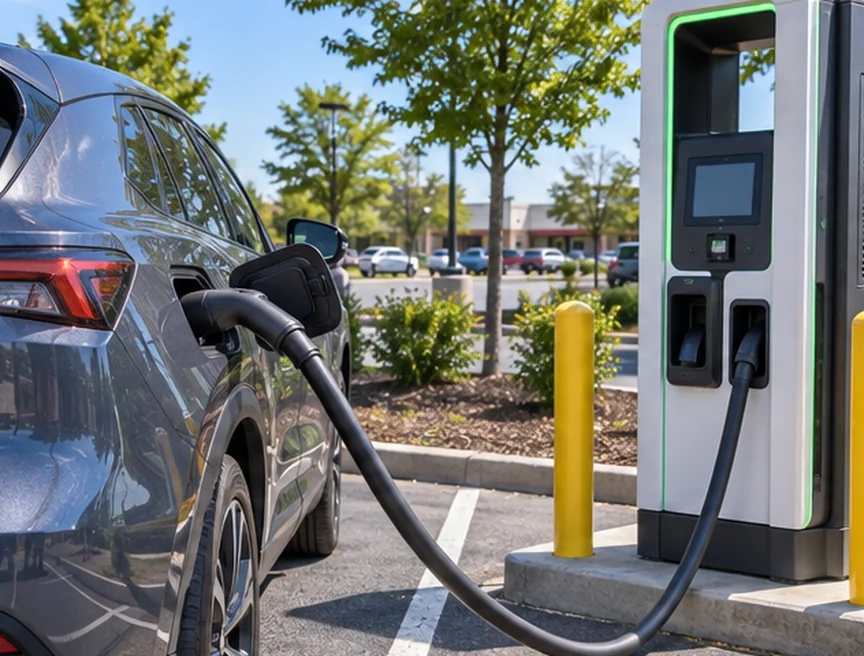
When you charge an electric car from a typical home charger, it supplies AC. The car has a charger onboard that converts the AC to DC for the battery. Most public fast chargers do that conversion in the cabinet by the parking space.
Why move the charger outside the car?
The equipment to convert a lot of power takes up space and needs cooling. A station can use a bigger charger without making every car carry one around. It sends DC through the cable to the car, bypassing the car’s onboard AC charger.
What decides how fast it charges?
The station and the car talk before and during charging. The car tells the station what voltage and current the battery can take. The station, the cable, and the car all have limits. A charger’s advertised maximum is a ceiling for that equipment, which you may reach only under the right conditions.
For more on the difference between AC and DC, see Basics of Electric Utilities 101.