
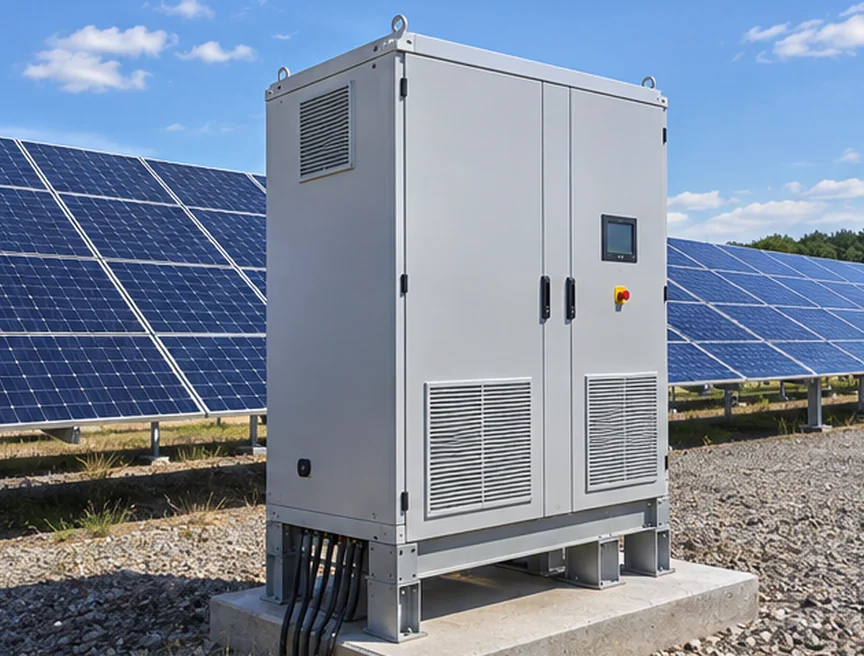
Solar panels make direct current. The utility grid uses alternating current. An inverter takes the power from the panels and changes it into AC that can be fed into the grid. That change happens before the power from the farm goes out on the utility line.
How does it match the grid?
A typical grid-following inverter measures what’s happening at its AC connection. It uses that information to shape the current it sends out at the right frequency and timing. It also controls how much current it sends as the amount of sun changes. Some inverters can help manage voltage at the connection, within limits set by the utility and the equipment.
Is the inverter the same as a transformer?
The inverter changes DC into AC. A transformer can then raise the AC voltage so the farm can connect to a utility line. Depending on the size of the farm, many inverters can feed the same group of transformers.
For more on AC, DC, and how generators connect to the grid, see Basics of Electric Utilities 101.