
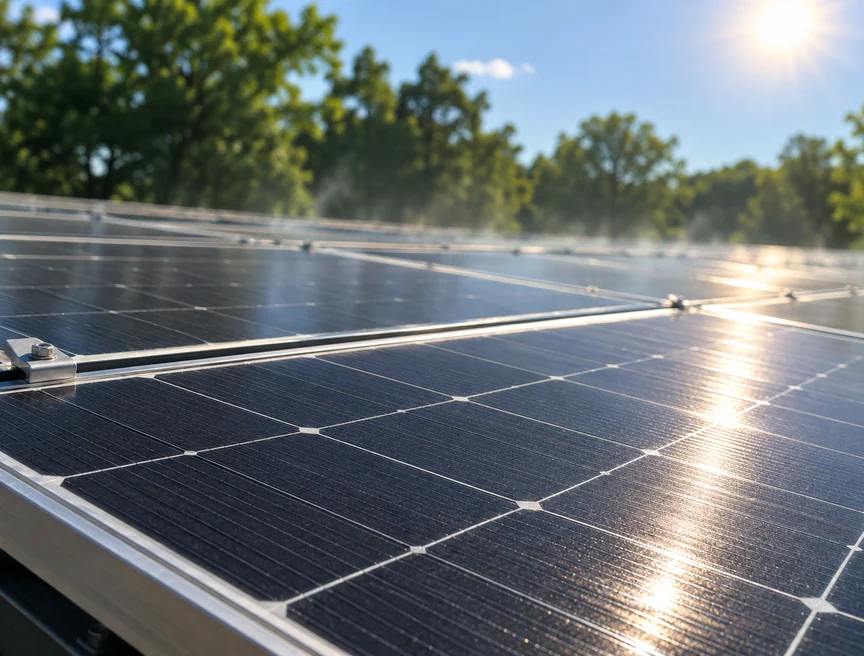
With the same amount of sunlight, a hot solar panel usually makes less power than a cooler one. Sunlight gets the cells working. Heat changes how efficiently those cells turn the light into electricity.
What changes inside the panel?
Power depends on voltage and current. In a typical silicon solar cell, warmer temperatures bring the voltage down. The current may go up a little, but the drop in voltage usually wins. That leaves less power coming out for the same light falling on the panel.
So is a summer day bad for solar?
A hot, sunny summer day can still be a great day for solar. More hours of sunlight can add up to a lot of energy. If you compare two equally bright moments, though, the cooler panel generally has the advantage. Think about the temperature of the panel itself. On a sunny roof it can be a lot warmer than the air your weather app reports.
For more on solar generation and how it fits into the grid, see Basics of Electric Utilities 101.