
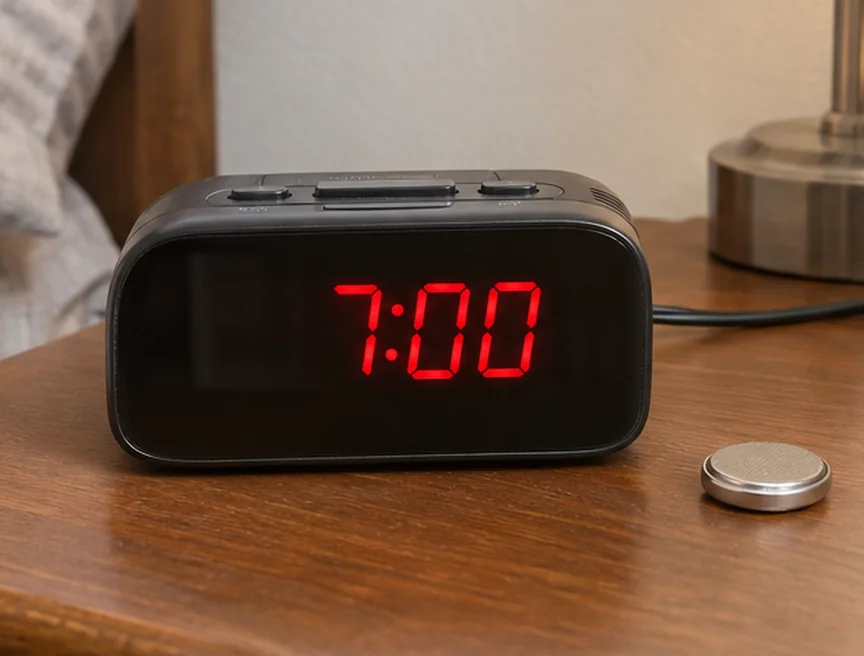
A plug-in clock can have a small battery that keeps its timing circuit powered when the outlet goes dead. It only needs enough energy to count the seconds and keep any settings it’s designed to save. The display can go dark while the clock keeps track of time inside.
Why not run the whole display from that battery?
The display can use much more power than the timing circuit. Leaving it off lets a little battery last longer. Some clocks also limit what an alarm can do on backup power.
Why does another clock blink after the power comes back?
It may have no backup, or the battery may be too weak. The electronics can tell they started again and blink the display to show that the old time is no longer reliable.
For more on what batteries can supply when normal power goes away, see Basics of Electric Utilities 101.