
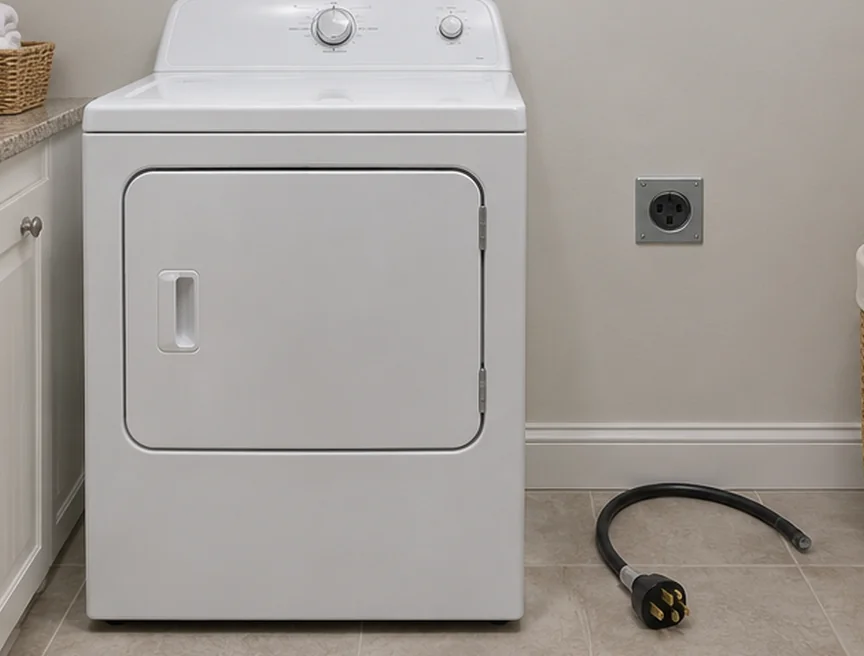
A typical U.S. electric dryer can run its heating element on 240 volts. Other parts can be made for 120 volts. The high-voltage load uses the two hot conductors, while a 120-volt part can take its supply between one hot conductor and neutral.
Why doesn’t the heater itself need neutral?
The current through the heater can go from one hot conductor through the element and back on the other one. The neutral has a job only when some part of the machine needs the voltage from one hot to neutral.
Is the neutral the same as the connection to the metal case?
The neutral is a current path for certain loads. The equipment ground provides a path for a fault involving the case. The arrangement depends on the dryer and the supply it was designed for, and older installations can differ.
For more on how U.S. homes get 120 and 240 volts, see Basics of Electric Utilities 101.