
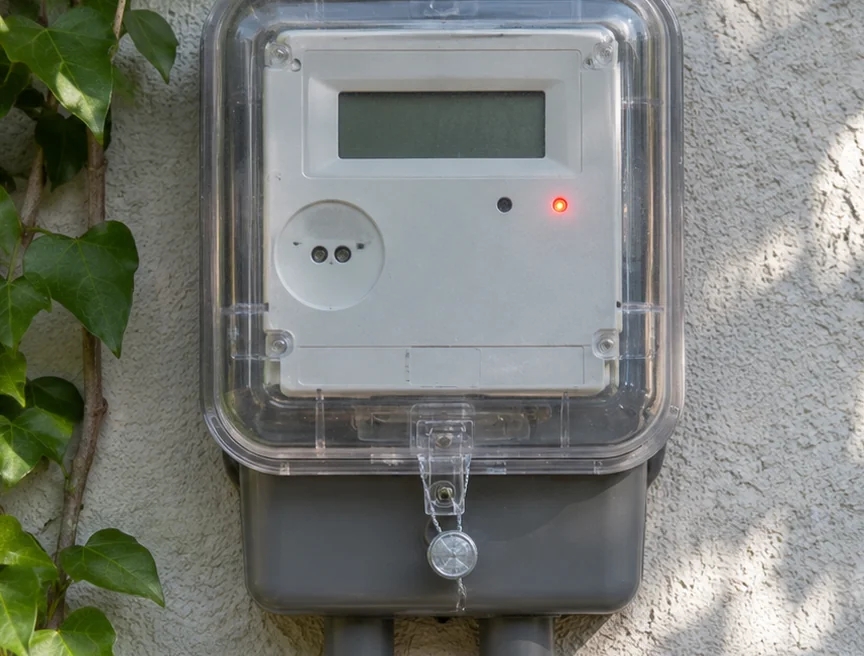
An electricity meter can have a small light that flashes each time it counts a certain amount of energy. If the building uses power faster, it reaches that amount sooner and the pulses get closer together. The light gives a visible indication of how quickly the meter is counting.
Does one flash always stand for the same amount?
It can stand for a fixed amount on a particular meter. Different models can use different amounts. The meter’s markings or documentation can tell you what a pulse represents. The flash itself is an indication, while the meter keeps the energy total.
Does every blinking light mean energy use?
There can also be lights for communication or the meter’s status. One of those can blink for a different reason. Which light you’re looking at matters before you interpret how fast it flashes.
For more on what watts and kilowatt-hours measure, see Basics of Electric Utilities 101.