
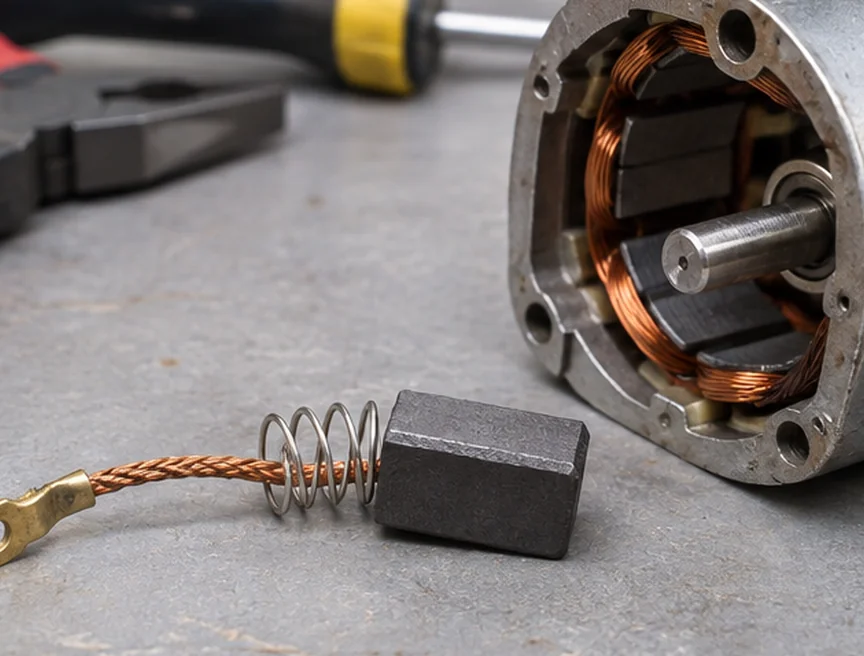
In a brushed motor, some of the windings turn with the shaft. The wires bringing electricity into the tool stay still. A brush bridges that gap. It’s usually a small piece of carbon or graphite held by a spring against the spinning metal contacts.
What are those metal contacts doing?
On a common brushed motor they form a ring of separate sections called a commutator. As the ring spins under the brushes, it changes which windings get current and in which direction. That keeps the motor pulling around as it turns.
Why do brushes wear out?
They slide against the ring every time the motor runs. The spring keeps them pressed against the contact surface as they get shorter. Brushless motors do the switching electronically and use a different arrangement so they can skip that sliding contact.
For more on how motors turn electrical energy into motion, see Basics of Electric Utilities 101.