
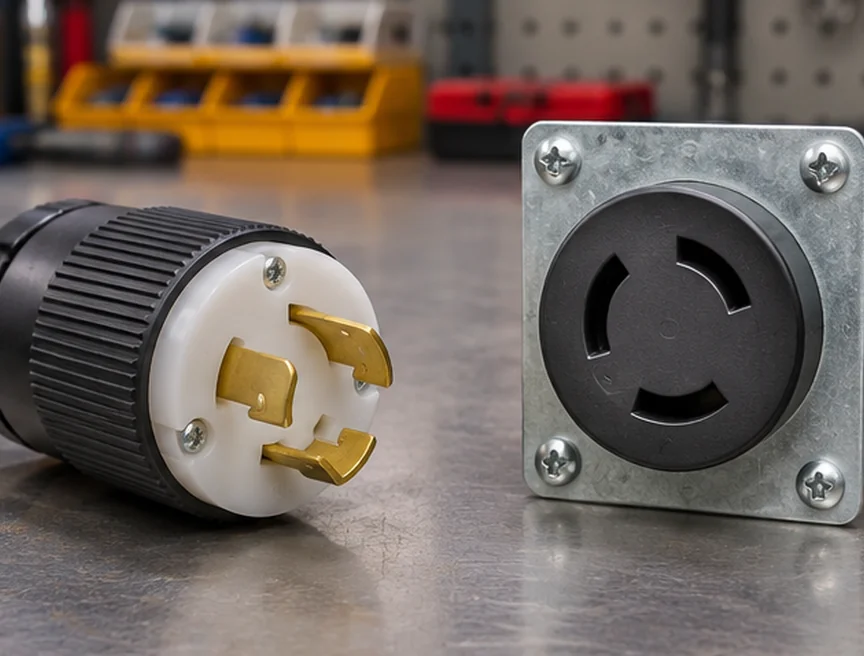
Some plugs have curved blades that go into matching slots. After the blades are inserted, a short turn latches them in place. A tug straight back on the cord then has a harder time pulling the plug out. This can be useful around portable equipment that’s moved or vibrates.
Why are there several shapes of locking connector?
Different equipment can need different voltages, currents, or numbers of conductors. A connector’s pattern helps keep incompatible types from mating. Its rating still has to suit the circuit and the equipment that uses it.
Does the twist make it a switch?
The twist secures the connection mechanically. Equipment can have a separate switch or a connector designed for a particular switching duty. The fact that a plug locks tells you how it stays in, rather than what it can safely switch.
For more on what makes a reliable connection between a source and a load, see Basics of Electric Utilities 101.