
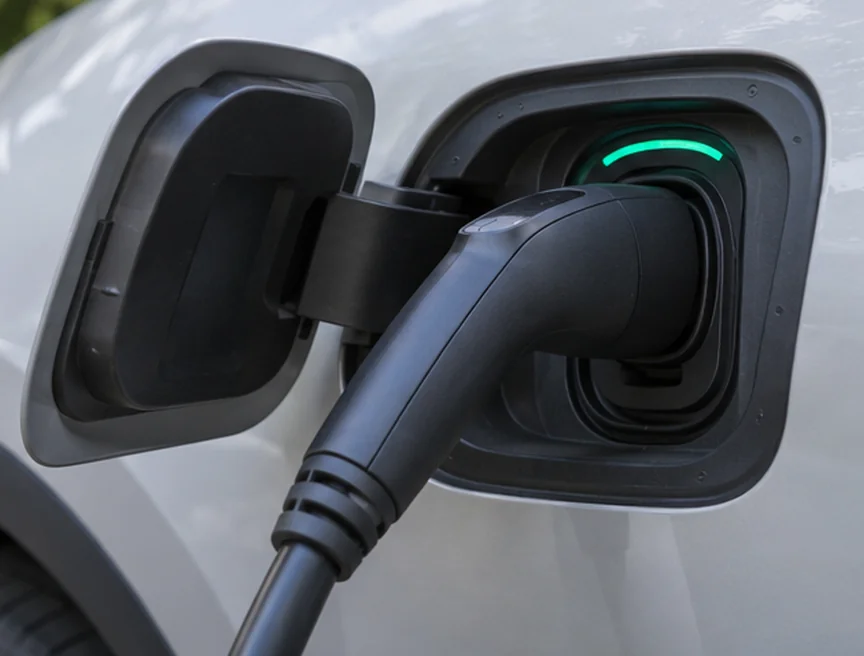
A charging connector has metal contacts that carry current between the charger and the car. Those contacts have some resistance, so they can get warm. A sensor near them can tell the charging system when the connection is getting hotter than expected.
Why measure heat instead of only counting amps?
The same current can produce different amounts of heating depending on how well the contacts meet, how warm they were to start with, and how well they can cool. Temperature gives the system another way to see what is happening at the actual connection.
What can the charger do with that reading?
Depending on the design, the car or charger can reduce current or stop a charging session if the temperature doesn’t stay within the expected range. That control is one part of how the equipment handles high current.
For more on how EV chargers keep current within the equipment’s limits, see Electric Vehicle Fundamentals.