
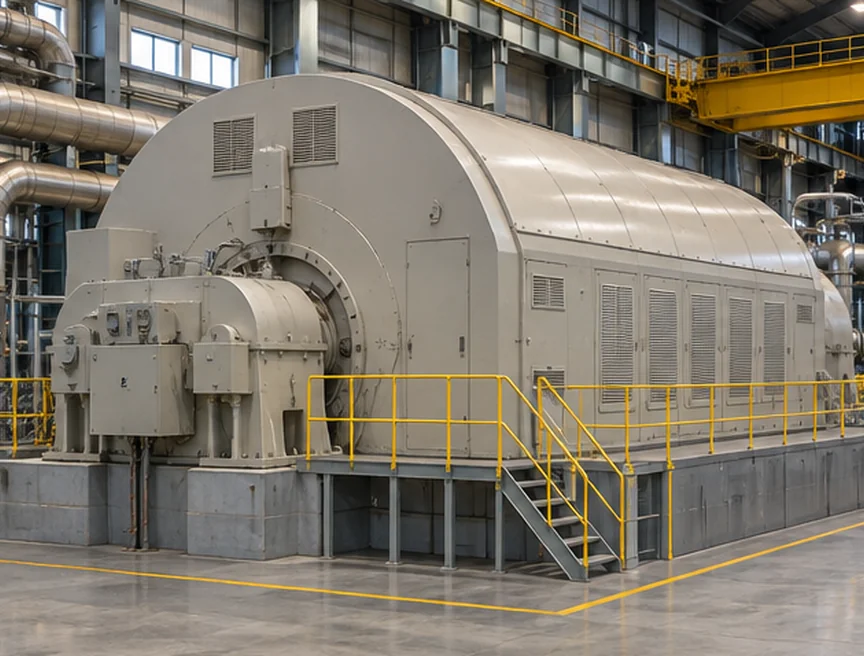
A large generator makes heat as it runs. Some circulate hydrogen inside the generator casing to carry heat to a cooler. Hydrogen transfers heat well and has low density, so the spinning parts can move through it with less drag than they would through air.
Does the hydrogen provide energy to the generator?
The turbine supplies the motion that makes the electricity. The hydrogen is there as a coolant. It circulates inside the casing as the cooler removes heat from it.
Why don’t all generators use it?
A hydrogen-cooled generator needs a sealed system and equipment to monitor and control the gas. Hydrogen can burn if it mixes with air. For smaller machines, ordinary air cooling can be simpler. Some large generators also use water to carry heat away from their windings.
For more on the equipment inside large generating stations, see Electric Power Generation.