
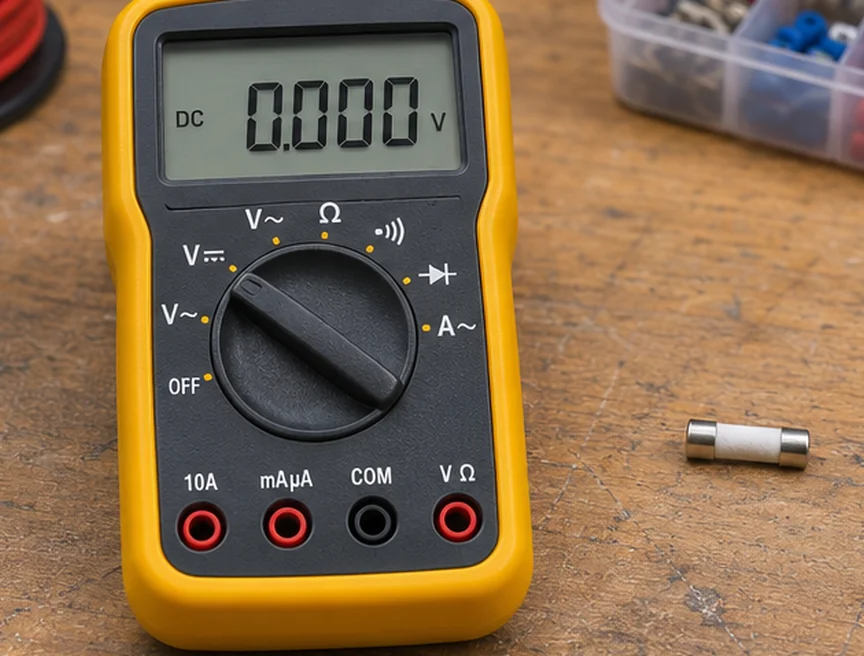
A meter can measure current by letting it pass through a low-resistance path inside the instrument. That path is meant to carry only as much current as the meter is rated to measure. Many meters include a fuse that can open if too much current goes through the input.
Is the meter doing the same thing when it measures voltage?
The voltage input usually draws very little current. It’s built differently from the current input. Putting a low-resistance path across a supply can let much more current flow than the instrument was meant to handle.
Does a fuse make every connection safe?
The fuse has its own rating for what it can interrupt. The meter and its leads have ratings too. The instrument’s markings and instructions tell the user what the different inputs are intended to measure.
For more on current and how a fuse protects an electrical path, see Basics of Electric Utilities 101.