
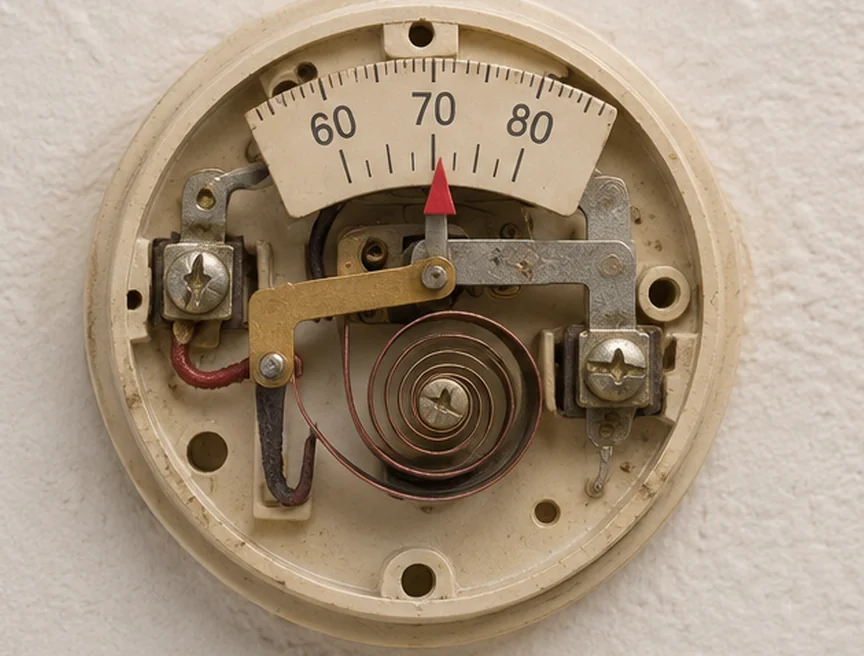
A mechanical thermostat can use a strip made of two metals bonded together. One expands more than the other as it warms, so the strip bends. Winding it into a coil gives the mechanism a useful amount of motion. That motion can operate a switch that calls for heat or cooling.
Why doesn’t the heat switch on and off every second?
The thermostat can have a small range between the point where it switches on and where it switches off. That gives the equipment time to run and the room time to change temperature before the switch moves back.
What replaced the coil in newer thermostats?
A digital thermostat can measure temperature with an electronic sensor and decide when to send the same kind of control signal. It can also use schedules or change how it responds based on what the equipment has been doing.
For more on how switches and sensors control electrical equipment, see Basics of Electric Utilities 101.