
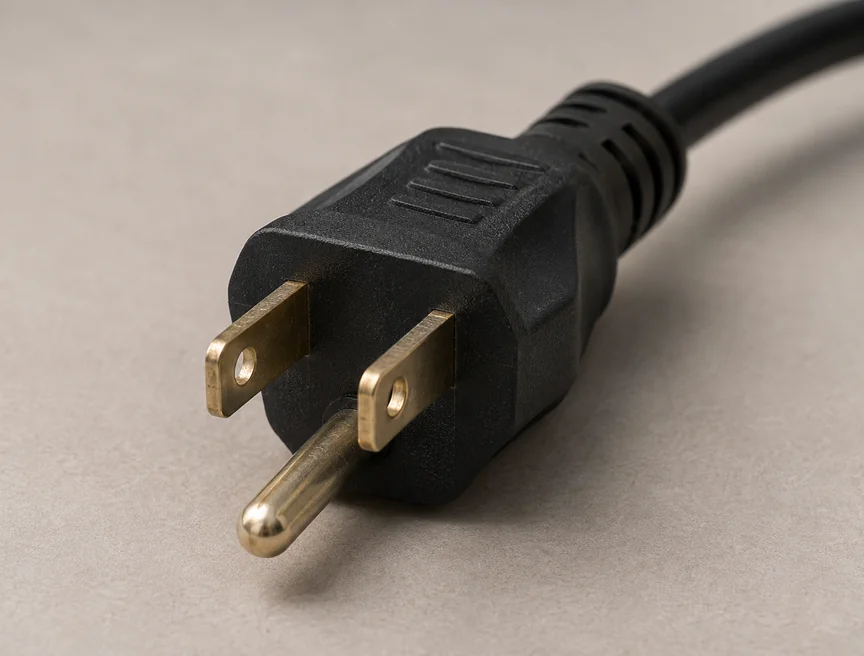
Take a look at the plug on a microwave. In a typical U.S. plug, the two flat blades are hot and neutral. They’re the everyday route for the current that warms up your leftovers. The round one is the ground pin. It has a job if something goes wrong.
Digging deeper
Imagine a wire comes loose inside the appliance and the hot wire touches the metal case. With an intact ground connection, fault current has a low-resistance route from the case back to the electrical supply. That can let enough current flow to trip the circuit breaker quickly. It’s a bit like an emergency exit. You’d rather have it there before you need it.
What about two-prong plugs?
Some appliances and tools are double insulated. They have two levels of insulation, or an equivalent reinforced barrier, between live parts and the places you can touch. That design can use a two-prong plug. If an appliance came with three prongs, leave the round one in place so it can do its job.
Fun detail. On a typical three-prong plug, the ground pin sticks out farther than the blades so it can make contact first. The part that sits idle most of the time is the first one through the door.
For more on circuits and how electricity reaches your home, see Basics of Electric Utilities 101.