
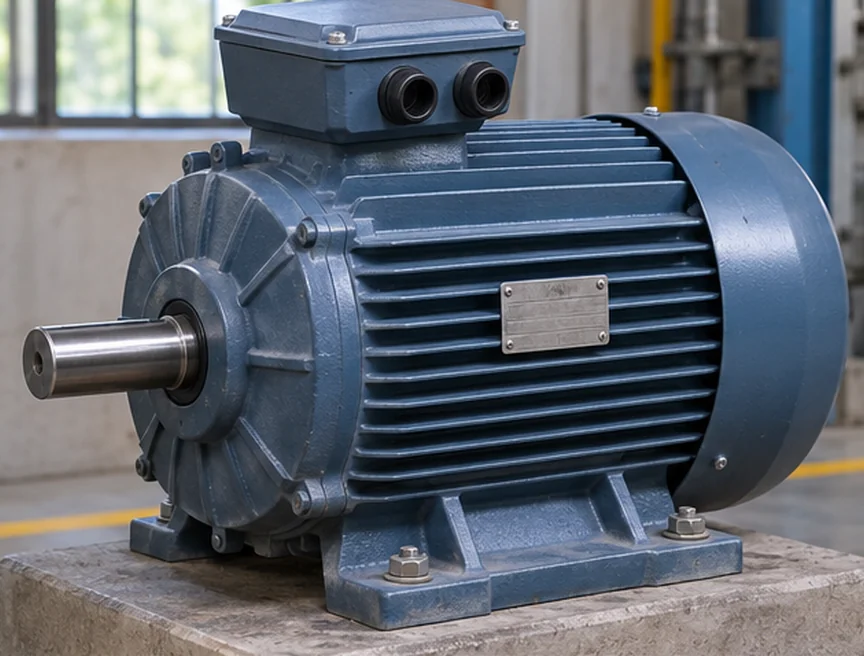
A motor can have more than one section of winding in each phase. Some designs let those sections share a lower voltage in parallel or divide a higher voltage between them in series. That lets the same motor be used with either of the two supplies on its nameplate.
Does it run twice as fast at the higher voltage?
The speed of a standard AC motor depends mainly on frequency, the number of magnetic poles, and the load. The voltage rating is there so the windings get the electrical conditions they were designed for. Getting the winding connection right lets the motor do much the same job at either listed voltage.
Do all dual-voltage motors use those same connections?
There are other arrangements. The diagram and rating for the particular motor determine how its windings are meant to be connected.
For more on how voltage and current work in three-phase motors, see Basics of Electric Utilities 101.