
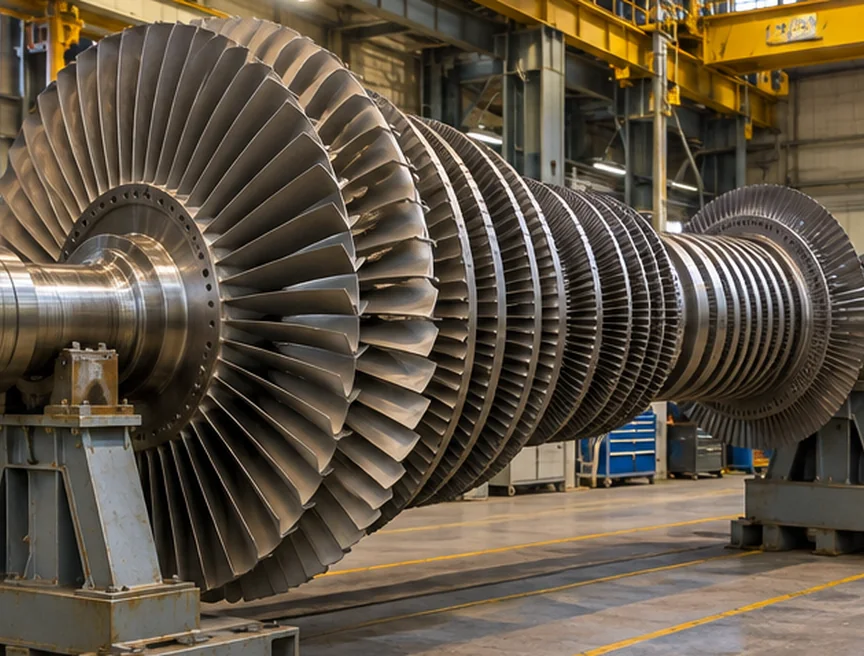
Inside a steam turbine, the steam can give up energy a little at a time. Stationary blades guide the flow into a row attached to the rotor. That moving row takes some of the energy and turns the shaft. Another set can do it again farther along.
Why do the blade rows get bigger?
The pressure falls as the steam expands. A pound of steam can take up more room at the lower pressure. The later rows often have taller blades and larger openings so that larger volume of steam can pass through.
Does each row drive its own generator?
Many rows turn the same rotor, and some plants have several turbine sections connected in one train. Their work can all end up turning a single generator.
For more on how turbines turn the energy in steam into motion, see Basics of Electric Utilities 101.