
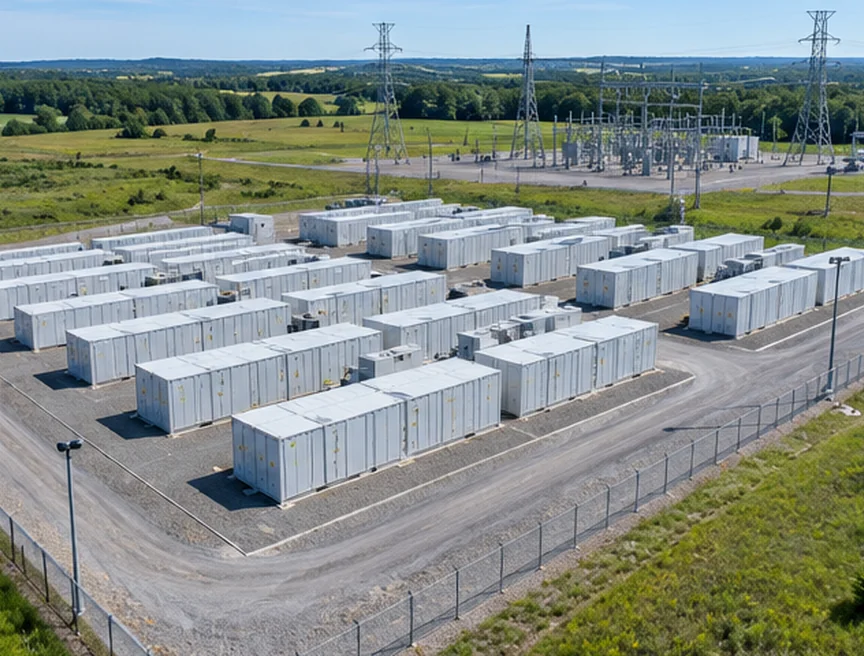
A big battery can charge when the grid has power to spare, then send power back when it’s needed. Think of a sunny afternoon when solar plants are putting out plenty. That battery can charge then and put some of the energy back onto the grid after sunset.
What’s the difference between megawatts and megawatt-hours?
Megawatts tell you how fast a battery can deliver power. Megawatt-hours tell you how much energy it can hold or deliver, depending on the rating. A battery rated at 100 megawatts and 400 megawatt-hours can in principle run at full power for about four hours. After that it needs time to recharge.
Does it have to wait until evening to help?
A battery can respond much faster than that. It can deliver or absorb power quickly to help keep the grid’s frequency steady. The evening shift and the short bursts use the same equipment in two different ways.
For more on what utility batteries can do and how they connect to the grid, see Battery Storage & Grid Integration.