
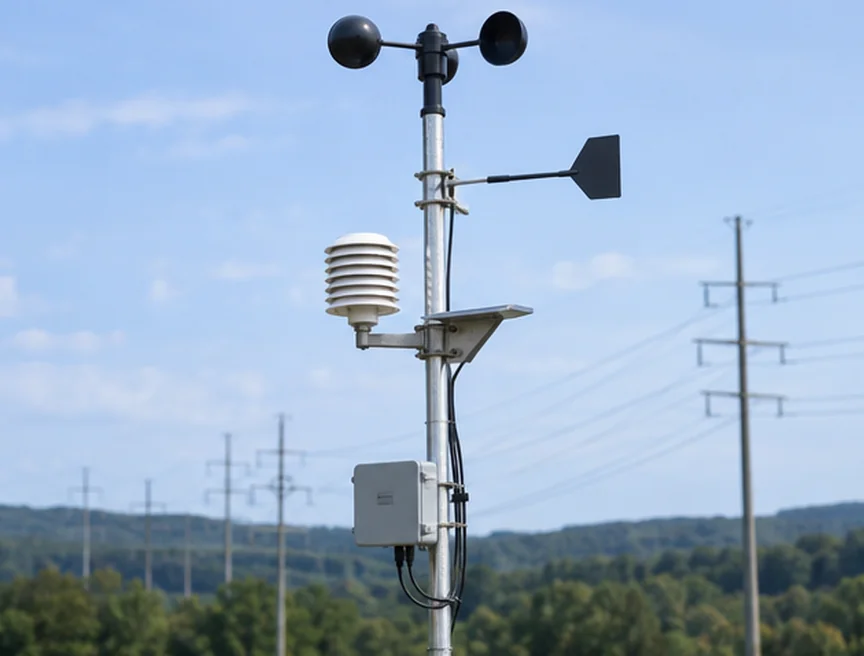
The weather at an airport or in town can be different from conditions along a power line. A station near the route can measure what the equipment is seeing. Wind, temperature, and other readings can help a utility understand how much the wire can cool or what crews might encounter in the field.
Can wind help the line carry more current?
Moving air can carry heat away from the conductor. That can let some lines carry more current within their temperature limit when conditions allow. A utility using those readings has to consider the whole route, including places where the wind is weaker.
What about storms or wildfire weather?
Local weather readings can help the utility plan inspections, crew work, or operating decisions. They’re one part of the information an operator looks at, alongside forecasts and what is happening on the grid.
For more on how weather affects the equipment that carries power, see Basics of Electric Utilities 101.