
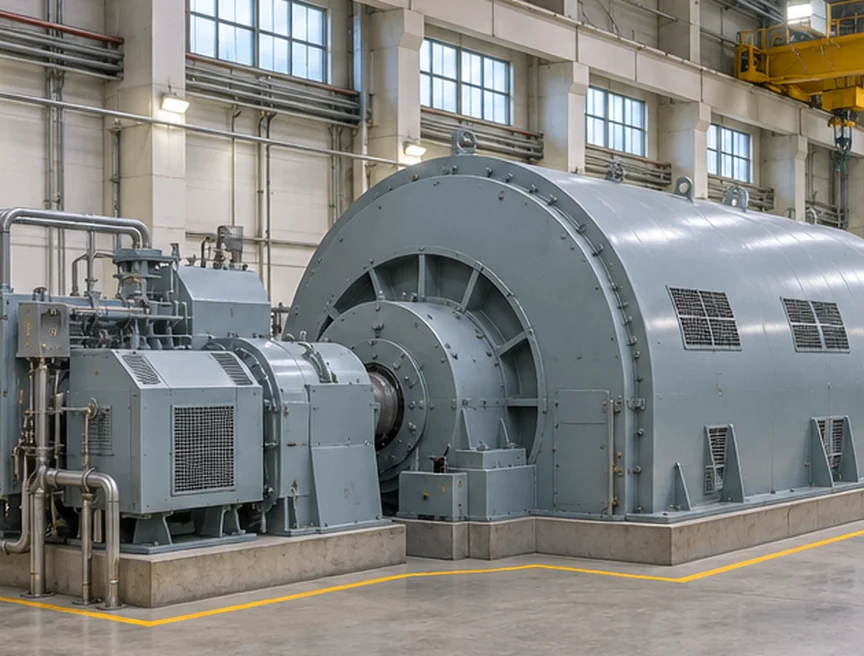
A generator’s megawatt rating describes real power, the part that supplies energy over time. A synchronous generator can also supply or absorb reactive power. That affects voltage on the grid around it. The machine’s reactive rating tells operators something about how much of that job it can do.
How does the generator change its reactive output?
A control can change the magnetic field in the rotating part of the machine. That can change how much reactive power it supplies or absorbs. The shaft’s mechanical input mainly determines how much real power it supplies.
Why can’t it just supply as much as the grid wants?
The windings and other parts have limits on current and temperature. How much reactive power the machine can handle can also depend on how much real power it is making. Operators work within a range set for the generator.
For more on what large generators can supply to an AC grid, see Electric Power Generation.