
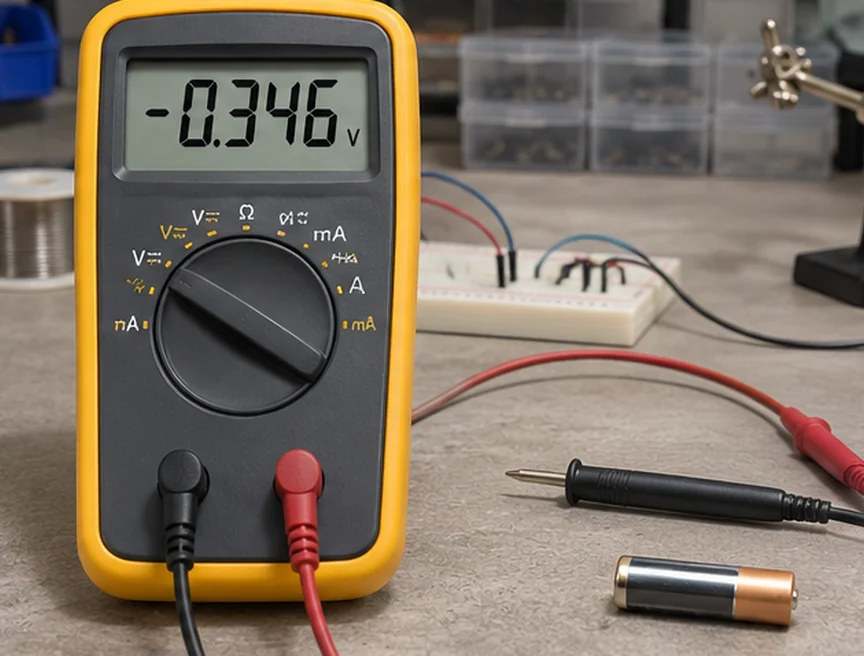
A meter in DC voltage mode compares the voltage at one probe with the voltage at the other. It needs a direction for that comparison. On a typical meter, the COM probe sets the reference. If the voltage at the other probe is lower than that reference, the result has a minus sign.
What if I reverse the two points?
For a steady supply, the size of the voltage difference can stay the same while its sign changes. It’s like measuring from the bottom of a step to the top, then making the same comparison from the top to the bottom.
Does that mean a battery has gone bad?
The sign by itself doesn’t tell you that. It tells you the direction of the reading relative to the meter’s reference. A device can also have a negative voltage relative to a common point in its circuit by design.
For more on voltage as a difference between two points, see Basics of Electric Utilities 101.