
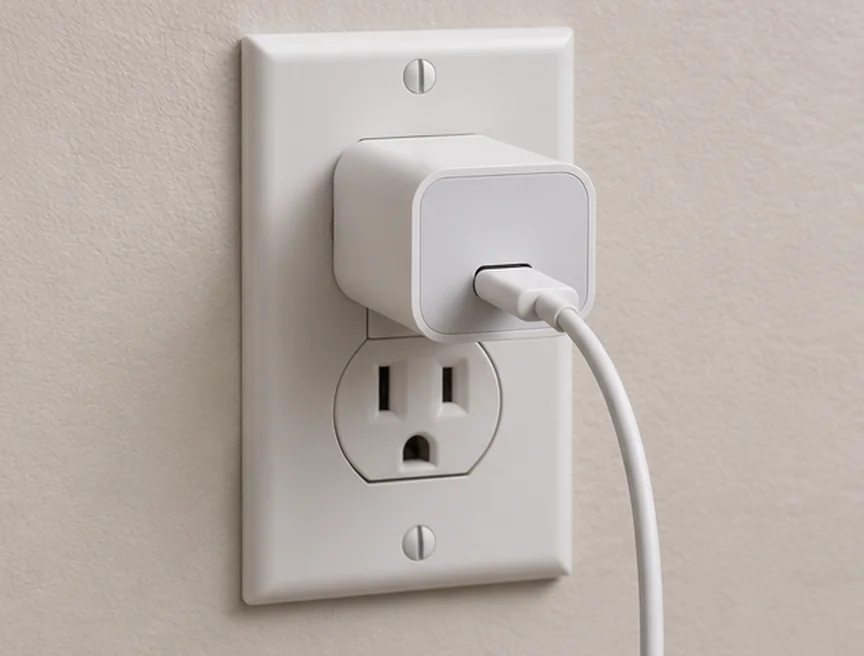
The electricity at the wall is alternating current, or AC. Its direction keeps reversing. Your phone runs on direct current, or DC. The battery also needs current to flow in one direction as it charges. The little block between the wall and the cable takes care of that mismatch.
What happens inside the block?
A typical modern charger turns the incoming AC into DC, then switches it on and off very quickly. A small transformer helps change the voltage and electrically separate the output from the wall side. The charger converts the output back to steady DC before it reaches the cable.
What if the phone can charge faster?
With USB Power Delivery, the phone and charger can agree on a higher voltage when both support it. The phone still controls what reaches the battery. That’s why the same charger can work with a pair of earbuds and a much larger phone.
For more on AC and DC, see Basics of Electric Utilities 101.