
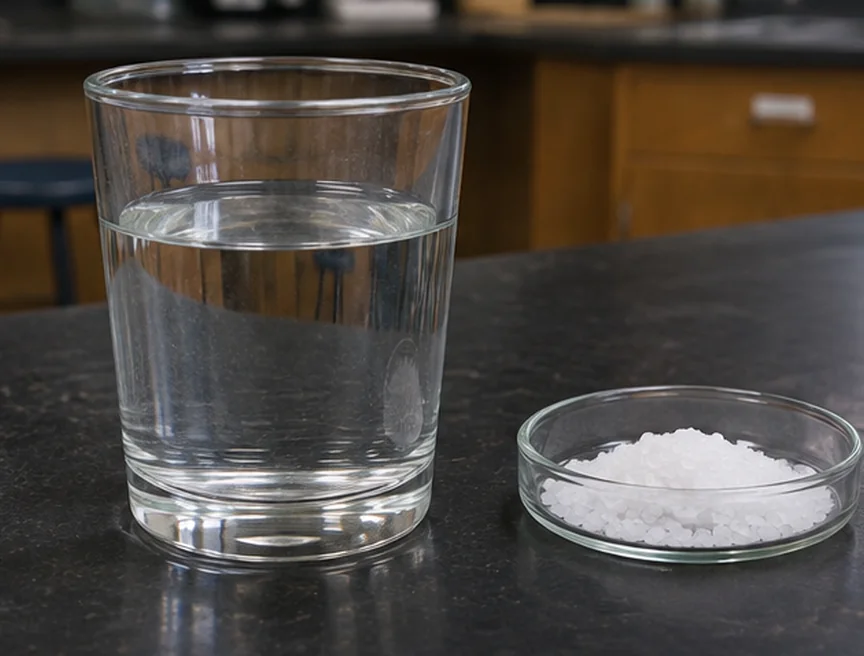
A metal wire carries current because electrons can move through the metal. In a glass of salt water, mobile charged particles do the job. They’re called ions. Dissolve table salt in water and it separates into positively charged sodium ions and negatively charged chloride ions.
How do the ions make a current?
An electric field pushes the positive ions one way and the negative ions the other way. Since their charges are opposite, both motions contribute to the same current. More dissolved salt generally means more charge carriers available to move.
What about ordinary tap water?
Tap water already has dissolved minerals, so it can carry current without any salt added. Very pure water conducts poorly, but it can pick up minerals and other impurities quickly. The water you run into at home is rarely that pure.
For more on what carries electric current, see Basics of Electric Utilities 101.