
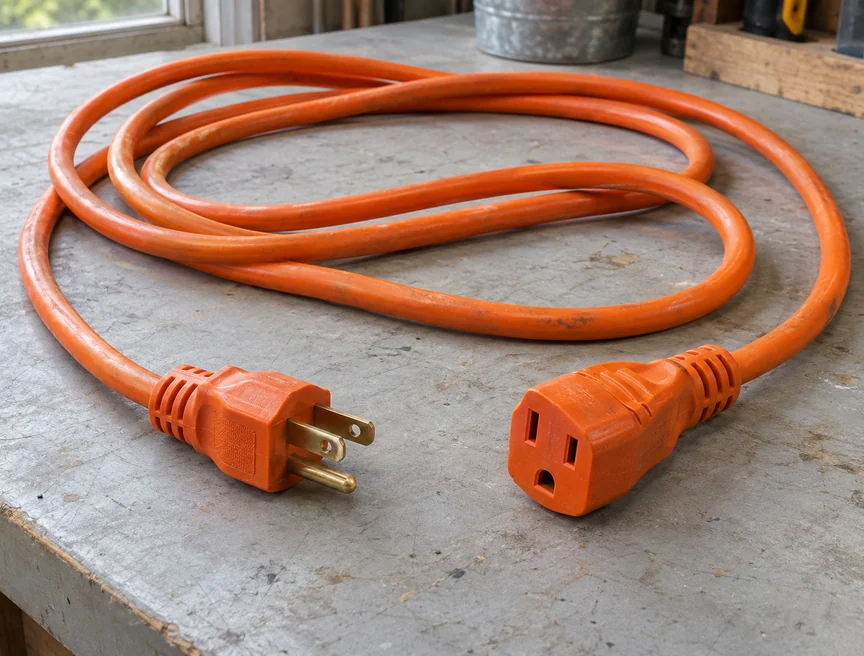
More wire means more resistance, if the two cords are made of the same material and have the same wire thickness. When you plug something in and turn it on, that extra resistance can mean less voltage at the tool. It can also mean more heat in the cord for the same current.
The trip is longer than it looks
On a typical 120-volt extension cord, the current goes to the tool on one wire and returns on another. So a 50-foot cord adds about 100 feet to that round trip. A small lamp draws little current and may barely notice the extra distance. A tool with a big motor can see a much bigger voltage drop.
Does a thicker cord help?
Thicker conductors have lower resistance for the same length. The thickness that matters is the metal inside the cord. A thick-looking outer jacket alone won’t tell you what the cord can carry. Check the cord rating and the equipment instructions for the length and size the job calls for.
For more on resistance and voltage drop, see Basics of Electric Utilities 101.