
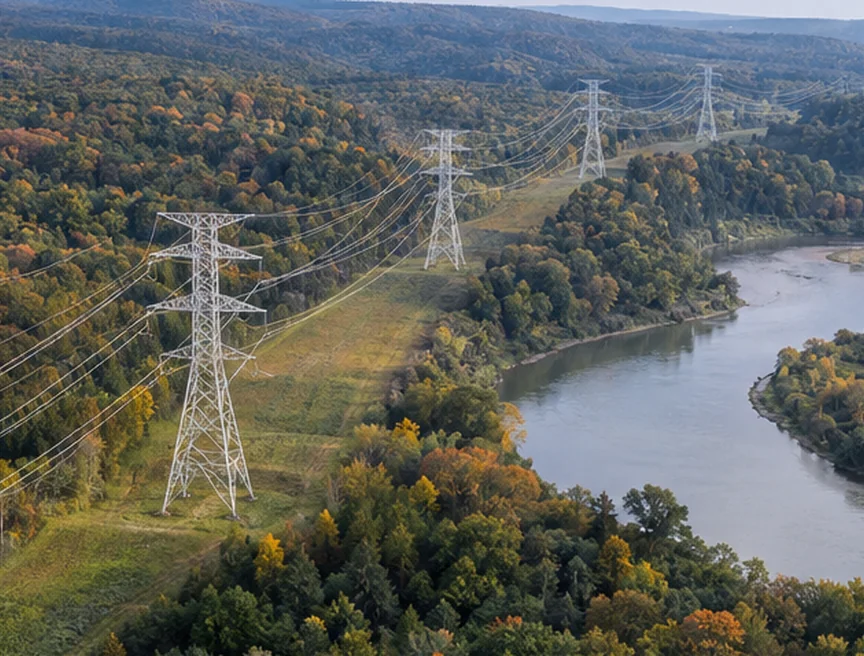
A straight line on a map can cross steep ground, developed land, or a wetland. Towers need locations where their foundations can work and crews can reach them. The line also needs room for the wires and a way to get access over its life.
Does a bend make the line more expensive?
It can. A corner puts sideways pull on the structure, so the tower or pole there may need to be stronger. But a bend can avoid a difficult crossing or let part of the line follow a corridor that’s already available.
Who decides where it goes?
The utility weighs routes against engineering, environmental, and land constraints. Property agreements and public approvals can also shape the final route. The shortest distance is one consideration among many.
For more on the structures and routes that connect parts of the grid, see Basics of Electric Utilities 101.