
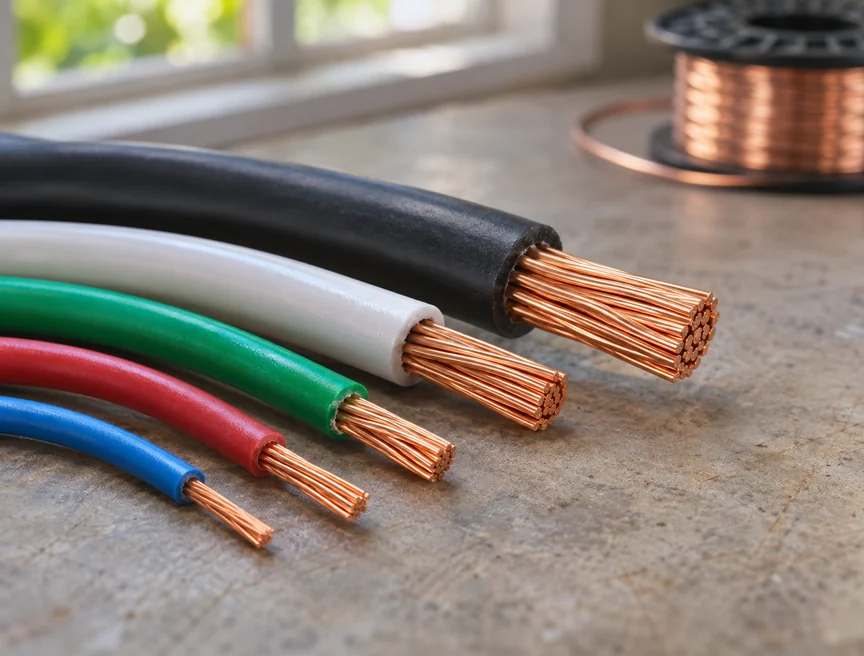
Copper lets current flow with relatively little resistance. It’s also easy to draw into wire and flexible enough for many everyday uses. That combination makes it handy when you have to run a wire through a wall, around corners, and into a little box.
What does low resistance buy you?
Imagine two wires the same length and thickness carrying the same current. The one with less resistance loses less energy as heat. It also has less voltage drop along the way. That matters when the power has a long way to go or the appliance on the other end needs a lot of current.
So why use aluminum overhead?
Aluminum has more resistance than copper for a wire of the same size, so an aluminum conductor generally needs more cross-sectional area for the same resistance. Even after making it bigger, the aluminum can still be lighter. Hang several miles of wire in the air and weight starts to matter. Many overhead lines use aluminum, sometimes with a steel core or another reinforcement to help carry the load.
For more on resistance and how utilities move power, see Basics of Electric Utilities 101.