
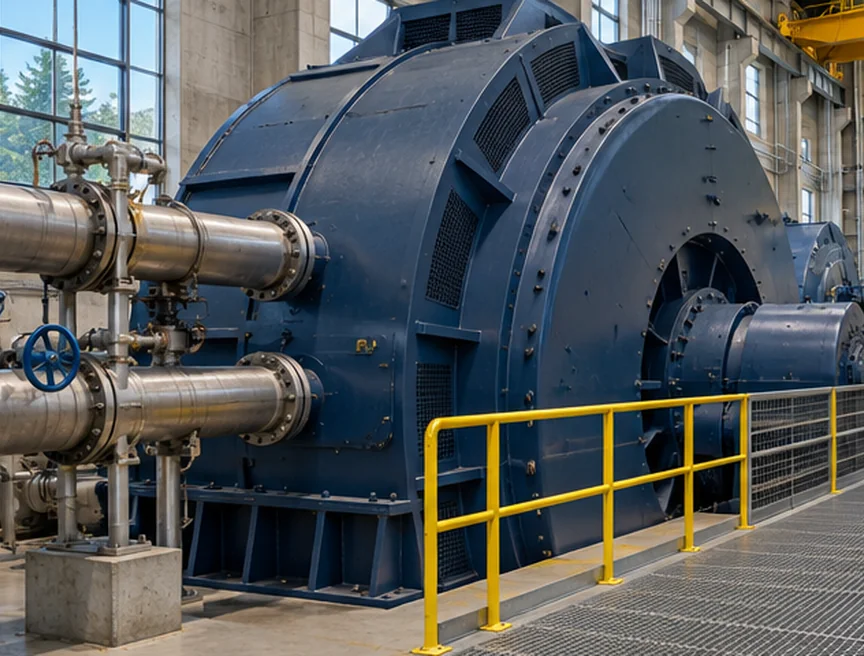
To make electricity you need a magnetic field and motion. A turbine supplies the motion by spinning the rotor. In many power plant generators, a little DC current in the rotor windings makes the magnetic field. That current is called excitation.
Why use electricity for the magnet?
An electromagnet gives the operator a way to change the strength of the field. That helps control the generator’s voltage. Once the generator is connected to a large grid, changing the field also changes how much reactive power the generator supplies or absorbs. The turbine supplies the mechanical energy the generator turns into electrical energy.
Where does the excitation come from?
Some machines have a small exciter mounted on the same shaft. Others take electricity from the generator terminals or another source and convert it to DC. Designs vary, but they all need a magnetic field to get the job done.
For more on how utility generators work, see Electric Power Generation.