Explain what limits bulk power transfer and how planners evaluate transmission needs.
Understand how power moves from generation to distribution through the interconnected transmission network. Connect the electrical principles, equipment, planning decisions, and operating limits that shape a reliable bulk electric system.
8 hours of contentOne full day or flexible segments
Virtual or in personInstructor-led training by Mostafa Sedighizadeh
Tailored for youTopics aligned to your priorities. Information customized to your company.
Course overview
Explore how transmission lines, substations, transformers, protection, and controls work together to deliver bulk power. The course follows the path from electrical principles and network structure to infrastructure design, system studies, operating constraints, and the technologies changing the grid.
Tailor the emphasis to your team's interests, equipment, regional context, and responsibilities. Topics include conventional transmission infrastructure alongside HVDC, FACTS, inverter-based resources, data centers, and modern monitoring and control.
Learning objectives
Explain how the interconnected transmission system transfers power from generation to distribution substations.
Apply real, reactive, and apparent power concepts to transmission loading, voltage support, and power factor.
Identify transmission-line and substation equipment and interpret common one-line and bus arrangements.
Compare protection schemes and explain the purpose of grounding, isolation, and overlapping protection zones.
Describe how HVDC and FACTS technologies control power exchange and voltage.
Distinguish power-flow, short-circuit, stability, and electromagnetic transient studies and their planning uses.
Explain how contingencies, thermal limits, voltage stability, and congestion constrain power transfers.
Assess the planning and operating questions introduced by IBRs, data centers, storage, and grid modernization.
Who should attend
Utility engineers, planners, operations and project staff, technical managers, and professionals who work with transmission assets or need to understand bulk-system decisions and constraints.
Familiarity with electric utility terminology is helpful; the opening module establishes the electrical concepts used throughout the course.
How equipment sets transmission capability
Equipment & connections
Understand the physical network.
Lines, stations, and connections define the paths available for bulk transfer.
Planning & performance
Connect studies to system limits.
Planning studies assess how those paths behave under normal and contingency conditions.
Technology & change
Prepare for an evolving grid.
The results inform operating limits and future equipment choices.
Course curriculum
Course content
Electrical principles and bulk-system behavior
Voltage, current, power, and energy: interpreting kV, A, MW, Mvar, MVA, and MWh in transmission applications.
AC and DC systems; frequency, RMS quantities, phase relationships, and the purpose of three-phase power.
Resistive, inductive, and capacitive behavior; real and reactive power, apparent power, and power factor.
Wye and delta connections; line-to-line and phase quantities; balanced three-phase relationships.
Per-unit representation and the use of common bases when comparing equipment and system conditions.
Synchronous generators, rotor angle, excitation, and governor response; the relationship between generation, load, and frequency.
Voltage magnitude, phase angle, and impedance as drivers of power transfer; synchronizing conditions at an AC connection.
Interconnections, industry structure, and regulation
Generation, transmission, subtransmission, and distribution: functions, voltage classes, and points of interconnection.
From early AC and DC systems to interconnected networks and extra-high-voltage development.
Eastern, Western, ERCOT, and Quebec interconnections; synchronous operation within an interconnection and controlled exchange through DC ties.
Generation and load diversity, shared reserves, mutual support, and access to regional power markets.
FERC oversight, NERC reliability standards, regional entities, and the responsibilities of owners, operators, and planners.
ISO and RTO roles in dispatch, regional planning, open-access transmission, and market operation.
Bulk Power System and Bulk Electric System terminology; regulatory definitions, applicability, and the limits of voltage-only classifications.
Transmission lines: design, ratings, and reliability
Project development from system need through routing, permitting, environmental review, right-of-way, engineering, construction, and commissioning.
Review the main concepts, connect them to your work, and discuss questions and other topics of interest to your team.
Agenda
8:00 a.m.–5:00 p.m., including eight hours of instruction, two 15-minute breaks, and a 30-minute lunch.
Morning
8:00–9:00 a.m. Electrical principles and system behavior
9:00–9:45 a.m. Interconnections and regulation
9:45–10:00 a.m. Break
10:00–11:00 a.m. Transmission lines and ratings
11:00 a.m.–12:15 p.m. Substations, grounding, and protection
12:15–12:45 p.m. Lunch
Afternoon
12:45–1:45 p.m. HVDC and power electronics
1:45–2:45 p.m. Transmission planning and studies
2:45–3:00 p.m. Break
3:00–4:00 p.m. Operating limits and congestion
4:00–4:45 p.m. Inverter-based resources and large loads
4:45–5:00 p.m. Recap and questions
Planning your course
How is pricing structured?
We quote one course fee for your organization, with no per-person charge. Share your preferred dates and delivery format when requesting a quote.
How is the course delivered?
Live online through Teams or your preferred platform. In-person training is also available.
Can we split the course into shorter sessions?
Yes. Eight instructional hours can be delivered as a full day, two four-hour sessions, or other agreed segments. The full-day agenda runs from 8:00 a.m. to 5:00 p.m., with breaks and lunch scheduled separately from instructional time.
Can the topics be tailored to our organization?
Yes. We can emphasize your equipment, regional context, planning priorities, and team responsibilities while preserving the electrical concepts needed for the discussion.
What background is helpful?
Familiarity with electric utility terminology is helpful. The opening module establishes the electrical concepts used throughout the course.
How do we get started?
Share your organization, audience, training goals, preferred timing, and delivery format. We will confirm the agenda, materials, and arrangements with you.
Straightforward group pricing
One course fee. Your whole team.
Your organization pays one course fee with unlimited attendees at no extra cost.
Live online training
$7,000
Typical fee for a one-day course delivered live online to your team.
In-person training
$9,000
Typical fee for a one-day course at your organization.
Request a proposal to confirm the fee, agenda, and delivery arrangements for your training.
Lead Engineer, Planning Policy & Research Southwest Power Pool
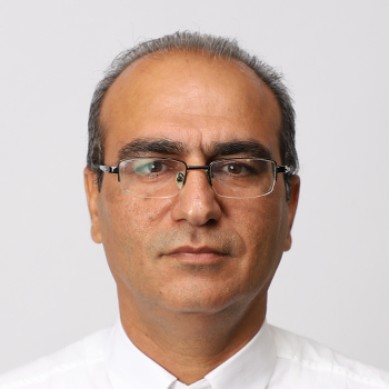
Dr. Mostafa Sedighizadeh brings more than 25 years of power-industry experience spanning substation and transmission-line design, transmission planning, and system research. Based in Little Rock, Arkansas, he works on Southwest Power Pool's Planning Policy & Research team.
His industry work is complemented by more than 30 years of academic experience in electrical power engineering. He has taught undergraduate and graduate courses and supervised more than 150 master's theses and 10 doctoral dissertations.
Dr. Sedighizadeh has authored more than 230 journal and conference publications, including work published by IEEE, IET, and Elsevier. His research focuses on optimization, artificial intelligence, and their applications to the bulk electric system.
At SPP, his work includes planning requirements for HVDC interconnections, inverter-based resources, large loads, and FACTS. He is a licensed Professional Engineer, a Senior Member of IEEE, and a member of CIGRE.