
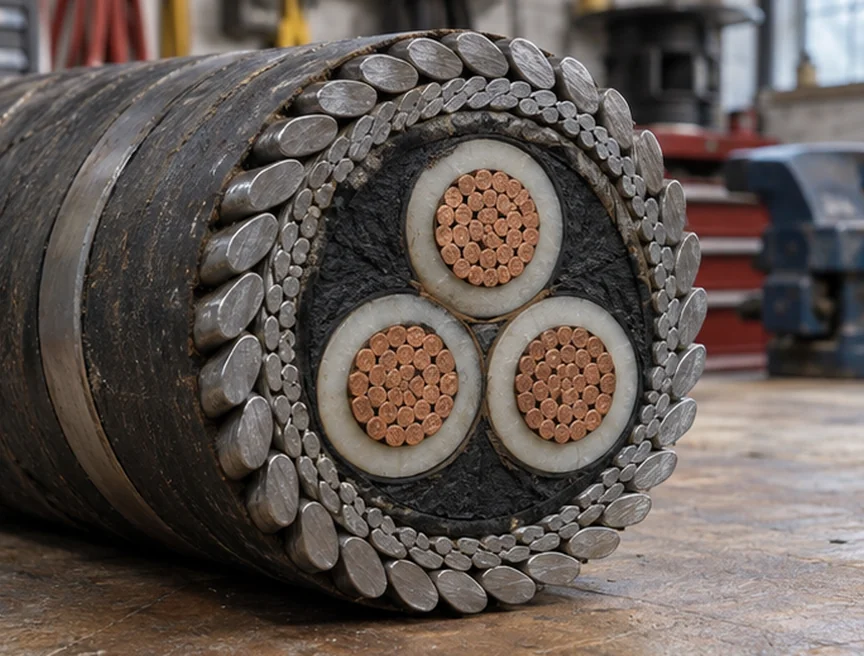
They cross in specially built cables laid on or buried under the seabed. Inside are metal conductors surrounded by insulation. Other layers can keep water out, give the cable strength, and protect it during installation and service.
How does it get down there?
A cable-laying ship carries the cable and pays it out along a surveyed route. In some areas the cable is buried for protection from anchors and fishing gear. Think of rolling out a very heavy garden hose from a moving truck. The sea, the route, and the amount of weight make it a much bigger job.
Why do some long cables use DC?
An AC cable draws some current just from repeatedly charging and discharging the electrical capacitance between its conductor and the surrounding layers. Over a long route, that uses up part of the capacity. Steady DC avoids that particular limit. It takes converter stations at the ends to connect a DC link to the AC grids, so the choice depends on the project.
For more on long-distance cable links and HVDC, see Electric Transmission Systems Training.