
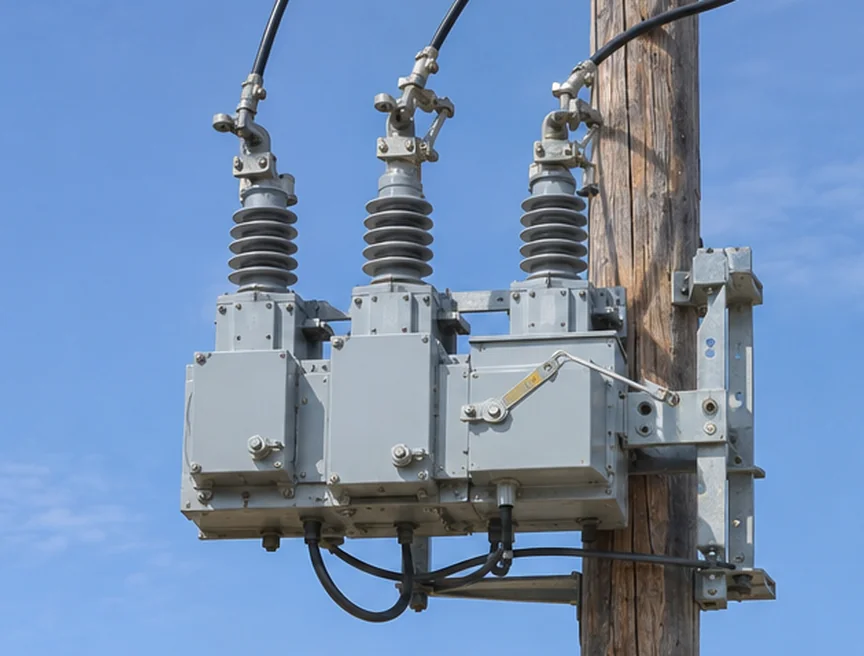
A sectionalizer helps a utility disconnect a problem on one part of a power line. A traditional automatic sectionalizer works with a breaker or recloser farther up the line. The upstream device interrupts fault current. The sectionalizer uses the interruption to open its own section when it sees that the fault is persisting.
How does it decide when to open?
One design counts how many times the upstream device opens after a fault. When it reaches its set count, it opens while the line is de-energized. When the upstream device closes again, other sections can get their power back.
Does every switch on a pole work like that?
Some switches are operated by a crew or by a remote control, and some modern equipment can perform several functions. The sectionalizer’s job is to separate the bad section so the whole line doesn’t have to stay out.
For more on how utilities switch and protect their overhead lines, see Electric Distribution Systems Training.