
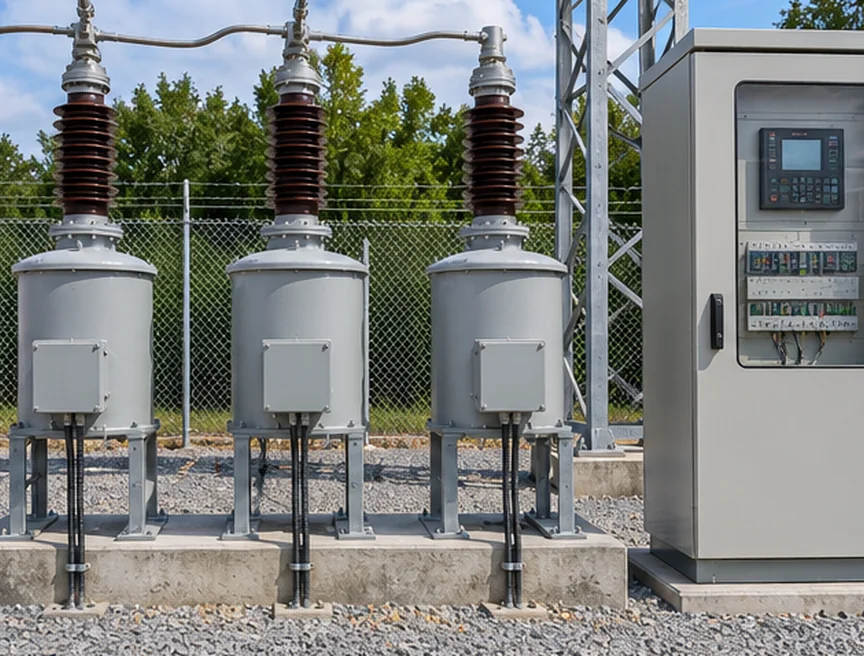
On a balanced three-phase circuit, the three phase-to-ground voltages are spaced evenly in time. Add their waveforms and the result is near zero. The part left over is called residual voltage. A relay can measure or calculate it to look for some changes in the circuit’s relationship to ground.
Why can a ground fault change the sum?
When one phase contacts ground, the phase-to-ground voltages can shift away from their usual pattern. How much they move depends on the way the system is grounded. The sum can then become noticeable even though the relay has many other readings to look at.
Does a residual reading tell you exactly where the fault is?
It gives a clue about the condition of the circuit. Other voltage, current, or direction measurements can help the utility decide what is happening and what equipment should respond.
For more on electrical measurements used to identify ground faults, see Power System Protection.