
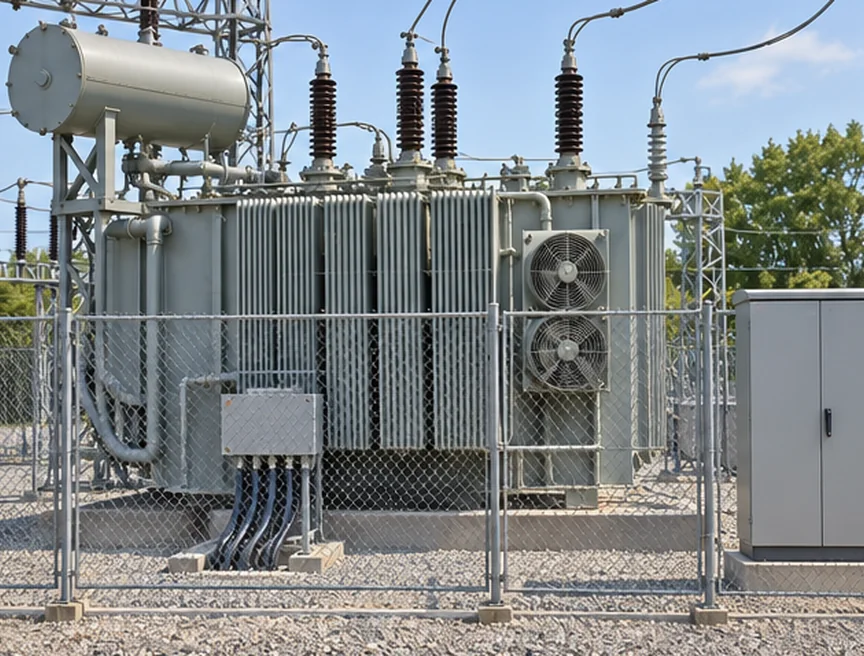
The current on one side of a transformer can be quite different from the current on the other because the transformer changes voltage. A differential relay compares measurements after accounting for that ratio and the way the windings shift the timing of the currents. That lets it look for a mismatch that shouldn’t be there.
What could make the comparison come out wrong?
A fault inside the protected transformer can give some current another path. But turning a healthy transformer on can also create a large current on one side for a short time. The relay can look for features of that starting current before deciding to trip.
What if the fault is farther down the line?
Current can pass through the transformer on its way to an outside fault. The protection is designed to distinguish that condition from trouble inside the area it’s meant to protect.
For more on how protective relays distinguish faults inside a transformer, see Power System Protection.