
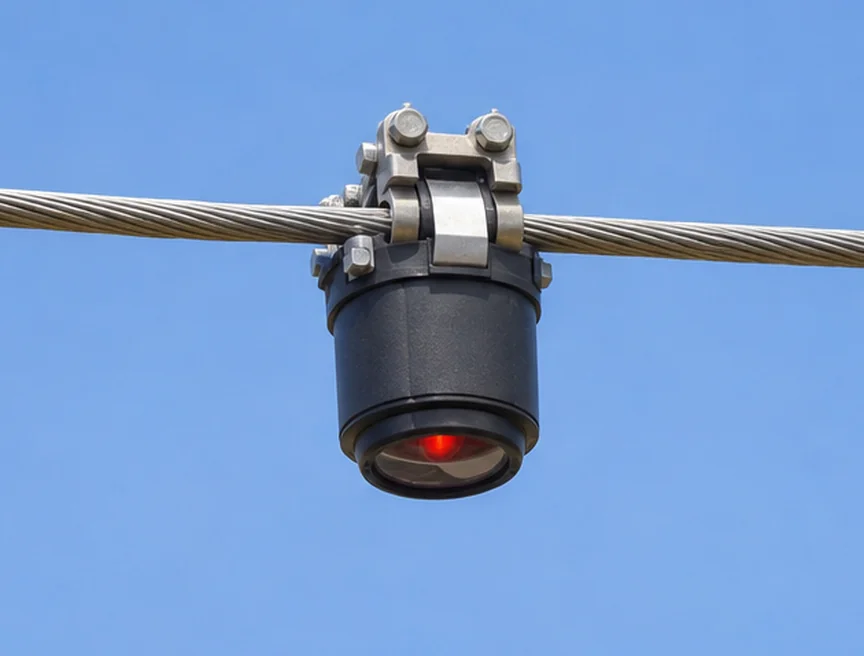
Some utilities put small fault indicators along a line. An indicator can sense the magnetic field from current flowing through the conductor. If it detects current with the signs of a fault, it can show an indication, such as a flashing light, for a crew looking from the ground.
Why put several on one line?
A fault usually sends current through the sections between the source and the problem. Indicators along that path can show where the abnormal current went. If crews find an indicator that operated and another farther along that didn’t, the fault may be between them or on a nearby branch.
Does it turn the line off too?
A simple indicator reports what passed by. A breaker or another protective device does the switching. Some newer indicators can send a message, so the control room can see a clue before a crew reaches it.
For more on how utilities find faults on distribution lines, see Electric Distribution Systems Training.