
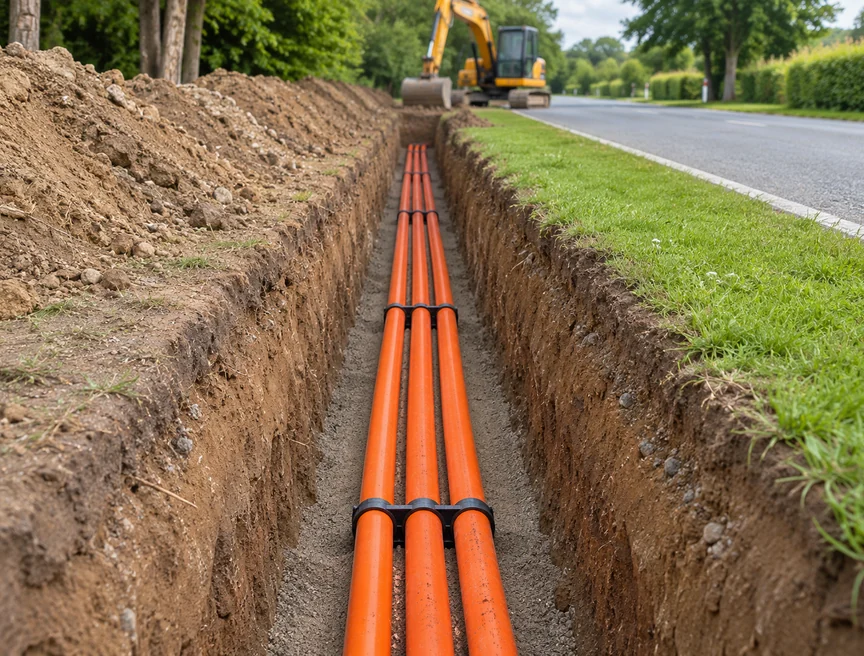
Burying a power line gets it out of the way of falling branches, wind, and ice. That sounds like a good deal right after a storm. The tradeoff is that underground lines usually cost more to put in and can take longer to find and fix when something goes wrong.
What goes in the trench?
An underground line needs cable designed for the job. There may be conduit, places to pull or join cable, and equipment boxes above ground. Crews have to work around water mains, roads, and whatever else is already buried. Putting cable in when a street is being built is one thing. Digging along a street that already has driveways and sidewalks is another.
Where did the line break?
With overhead lines, crews can often see the broken pole or the branch that landed on a wire. Underground, they may have to test the cable to find the fault, then get access to the damaged section. An excavator can hit a buried cable, and flooding can affect some equipment. Putting the line out of sight can make the problem harder to see, too.
Utilities weigh those tradeoffs one route at a time. A short stretch through the trees may be worth burying even if the rest of the line stays overhead.
For more on how utilities choose between overhead and underground construction, see Electric Distribution Systems Training.