
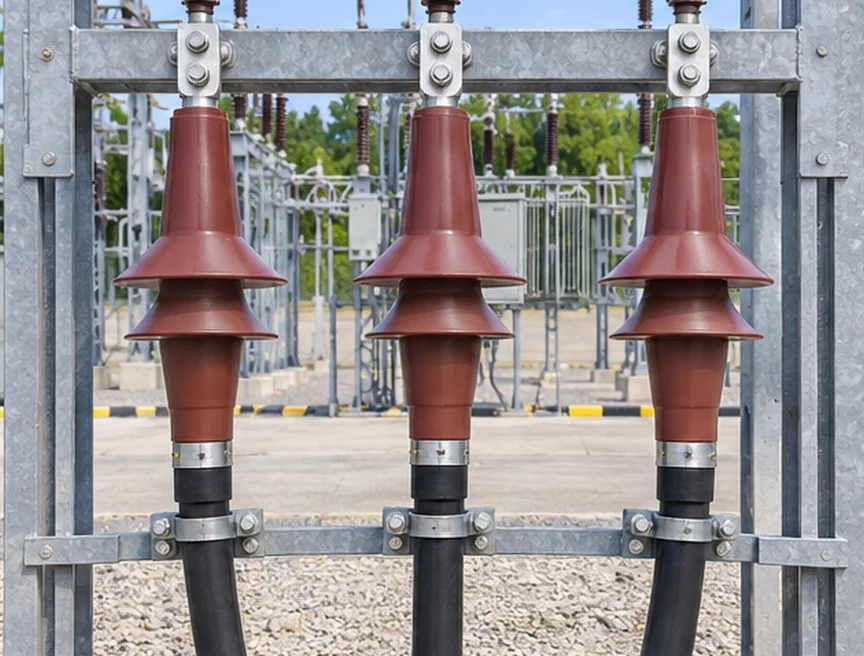
Inside a shielded cable, the electric field is mostly contained between the conductor and the grounded shield. Where the cable ends, the shield has to stop so the conductor can connect to equipment. If the edge of the shield is abrupt, the field can get especially strong in a small area.
What does the cone change?
A stress cone or another form of stress control changes how the field spreads around that edge. It helps keep one small part of the insulation from seeing a much stronger field than the rest. Some terminations do it with a shape you can see, and others use materials built into the fitting.
Does it hold the cable up?
Its main job is electrical. The termination and the equipment around it also need suitable mechanical support. The same fitting can have different parts for those different jobs.
For more on how shielded power cables meet overhead lines and other equipment, see Electric Distribution Systems Training.