
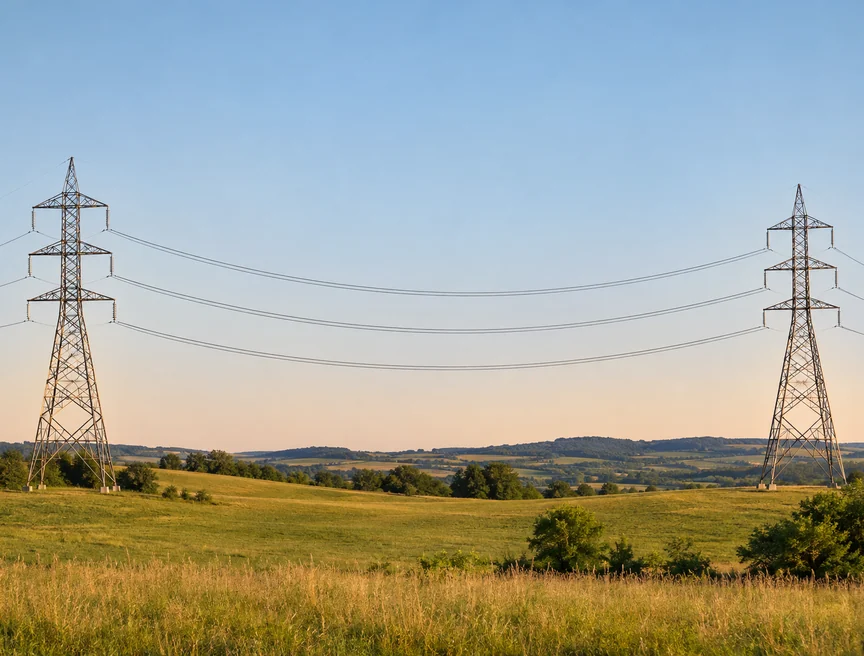
A power line gets a little longer when it warms up. The towers are still standing in the same places, so that extra length has to go somewhere. Between two towers, it usually shows up as a deeper dip in the wire.
Think of a clothesline
Hang a rope between two posts and it curves under its own weight. Give it a little more rope and the middle hangs lower. A power line behaves in a similar way when its metal expands. Over a long span, even a small change in length can make a noticeable difference in how far down the wire hangs.
The wire has its own weather
Air temperature is only part of the story. Sunlight warms the conductor, and the current going through it produces heat. A breeze can cool it down. That’s why the temperature of the wire can be quite different from the number on your outdoor thermometer.
Utilities account for sag when they set line ratings and check clearance above roads, trees, and other objects. The lowest part of the wire can be the part that decides how much power the whole line can carry.
For more on how temperature and clearance affect line ratings, see Electric Transmission Systems Training.