
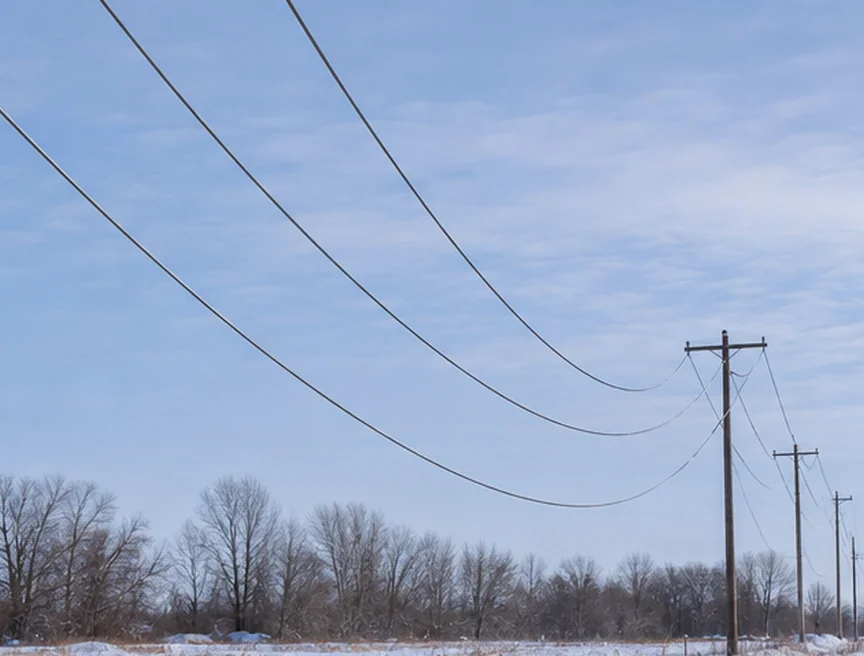
A long power line can sometimes move up and down in a broad, slow swing. That’s called galloping. It often happens when ice builds up unevenly on the wire. Wind pushing on that uneven shape can keep adding energy to the motion, a little like a push on a swing.
Why is the big movement a problem?
An overhead line needs space between phases and between the wires and structures around them. Galloping can narrow those gaps. It can also put repeated loads on the supports and hardware.
Is this the same wiggle a small line damper stops?
The small, faster vibrations that happen in a steady breeze are a different kind of motion. Galloping can move a much larger part of the span. Utilities account for it in line spacing and can use hardware suited to the larger movement.
For more on how overhead line hardware responds to weather, see Electric Transmission Systems Training.