
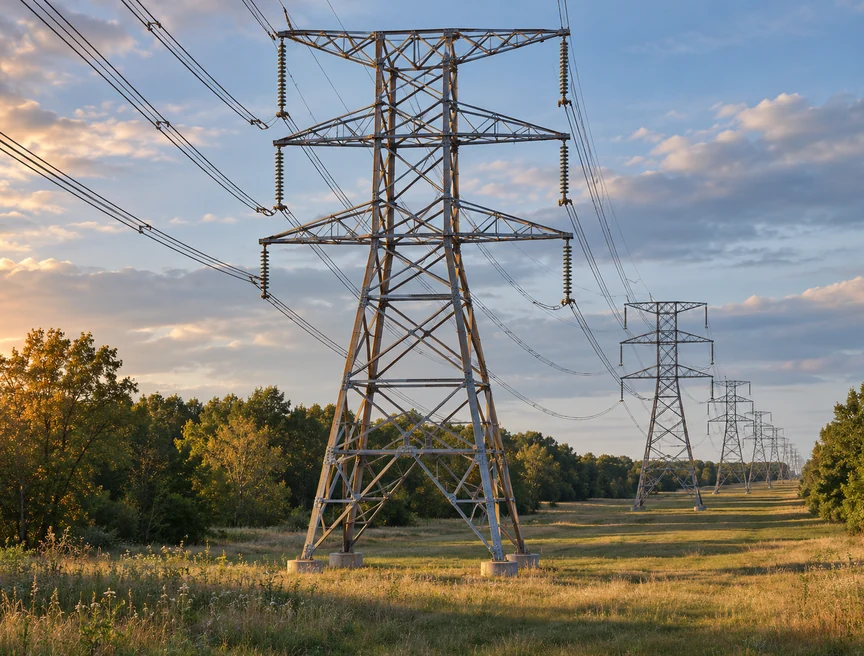
Because it lets utilities move the same amount of power with less current. Less current means less heat in the wires. That matters when you’re trying to get electricity across a state and have some left when you get there.
Let’s do the easy math
In a simple example, power is voltage times current. To move 10,000 watts at 100 volts takes 100 amps. Raise the voltage to 1,000 volts and the same 10,000 watts takes just 10 amps.
Here’s the part that makes it worthwhile. Heat loss in a wire goes up with the square of the current. With the same wire and one-tenth the current, you get one-hundredth of the heating loss. It’s a pretty good deal for moving power a long way.
So why stop there?
Higher voltages need more space between wires and better insulation. All that equipment adds cost, so engineers pick a voltage that makes sense for the job. Transformers step the voltage up for the long trip and back down in stages before the electricity gets to your toaster. Your bagel has no idea how far it’s come.
For more on how utilities choose line voltages and move power between regions, see Electric Transmission Systems Training.