
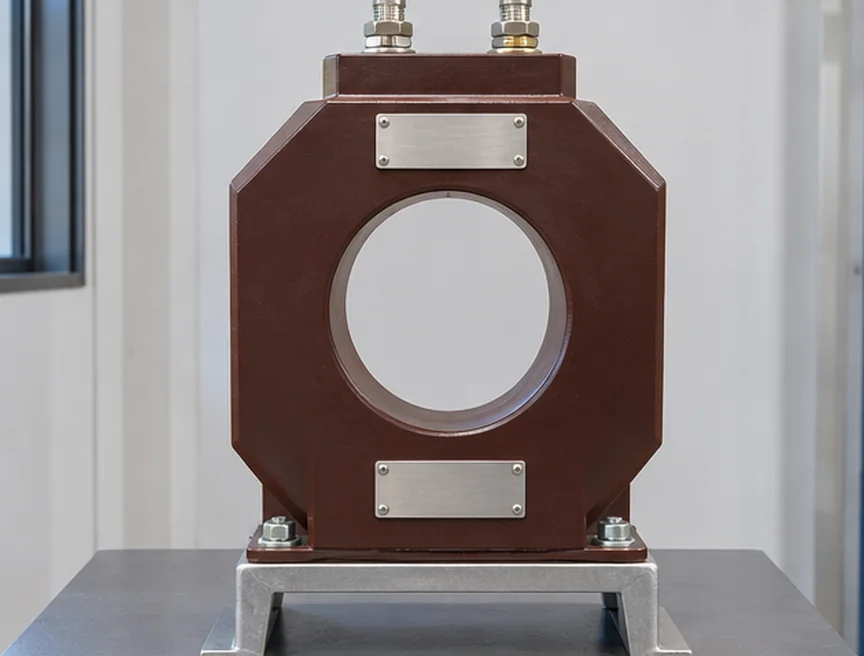
A current transformer gives instruments a smaller copy of the current on a line. A meter needs good accuracy through the range where the line usually runs. A protective relay may need a useful reading during a fault, when the current can be many times higher.
Why can the same core be a poor match for both?
As current rises, a magnetic core can reach a point where it stops following it accurately. A protection core can be designed to stay useful much farther into that high-current range. A metering core can be optimized for normal readings and may be designed to limit the output reaching the meter at high current.
Does that mean there are two power lines?
The same main conductor can pass through both cores. Each core has its own output circuit for the equipment it serves.
For more on what protective relays need from their current measurements, see Power System Protection.