
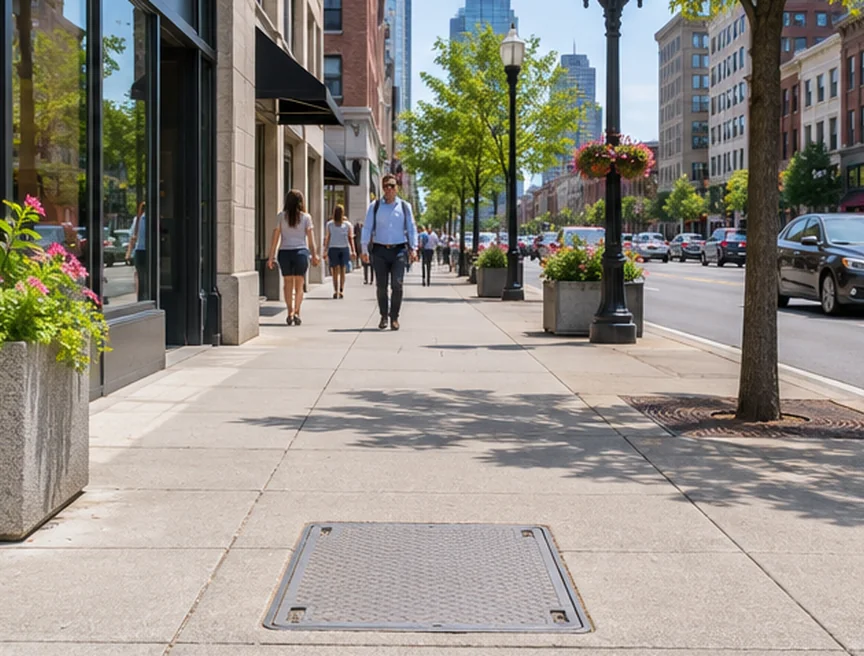
In some dense downtown areas, several transformers feed a common set of low-voltage cables. The cables form a network serving buildings in the area. Each transformer can take power from a higher-voltage feeder and add it to the network.
What happens if one feeder goes out?
The other transformers can often keep the network energized. A device called a network protector can disconnect a transformer when power would otherwise flow back from the network through it to the failed feeder.
Why use that arrangement downtown?
Many customers are close together and may need a very dependable supply. A network can give them several paths for power, but it takes more equipment and more coordination. Other neighborhoods often use a simpler arrangement.
For more on distribution networks and the equipment that protects them, see Electric Distribution Systems Training.