
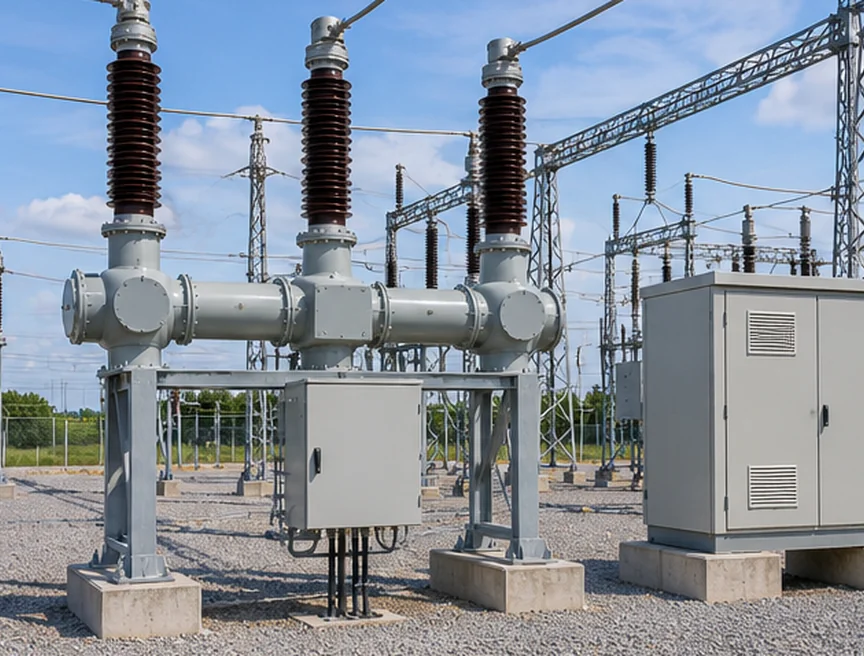
Closing a breaker onto a long line can launch a voltage wave along it. That wave can reflect where it meets a change in the circuit. Some high-voltage breakers are designed to connect the line briefly through a resistor and then make the normal connection.
What does the resistor do in that short time?
It changes the way the circuit first energizes. That can reduce the size of some switching surges. Once the main contacts close, the resistor is bypassed. The line can then carry ordinary load without having that extra resistance in its path.
Does every transmission breaker need one?
The choice depends on the line and what its insulation and other equipment can handle. Utilities can use other ways of controlling switching surges. A temporary resistor is one arrangement for particular applications.
For more on what can happen when a long transmission line is switched, see Electric Transmission Systems Training.