
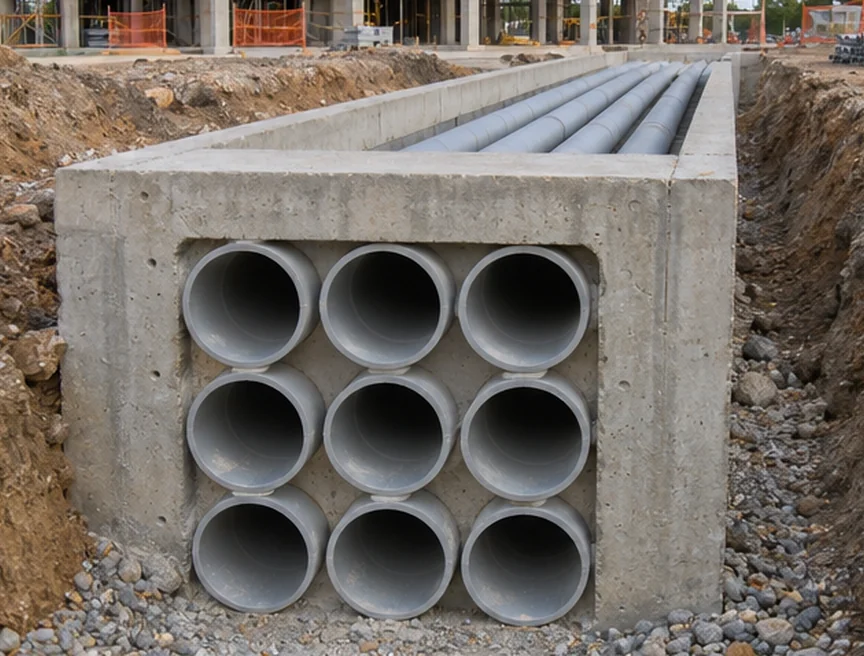
A duct bank can collect several separate conduits in one underground route. Concrete around them helps keep the ducts in position and can provide physical protection. The utility can pull cables through chosen ducts when it needs them and may leave some empty for later use.
Why not put every cable directly in the soil?
Direct burial can work in some places. A duct bank can be useful where several circuits run together, where the ground needs extra protection, or where the utility wants to reach the cable from access points later. The civil work costs more, so it depends on the route.
Does concrete change how the cables cool?
Heat still has to leave the cables and reach the surrounding soil. The spacing, duct materials, soil, and number of loaded circuits can all affect how much current the bank can carry.
For more on how utilities build and maintain underground distribution lines, see Electric Distribution Systems Training.