
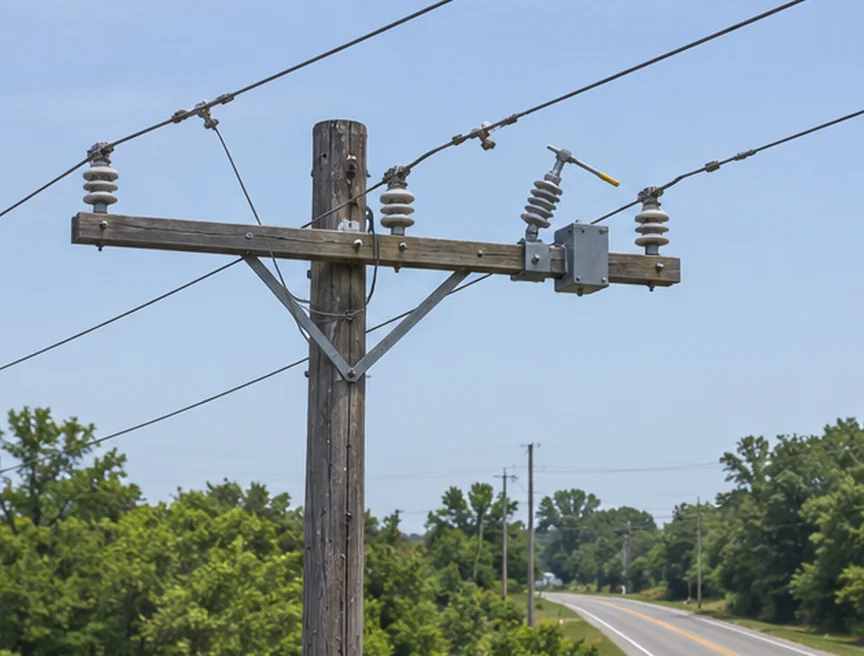
Two neighborhood lines can meet at a switch that stays open in normal operation. Each line serves its own area. The open switch leaves a boundary between them, but it also gives the utility another way to supply part of one line when conditions change.
When might the utility close the tie?
If a section loses its normal supply, crews can isolate the problem and use the other line to serve some customers. They first need to know whether the alternate line and its equipment can carry the extra load. The switching arrangement also has to work with the line’s protection.
Does the utility leave it closed forever?
The new arrangement may be temporary while equipment is repaired. Sometimes the open point moves to another location to balance loads or support maintenance. The switch gives the utility a choice about how the lines connect.
For more on how utilities switch and reconfigure distribution feeders, see Electric Distribution Systems Training.