
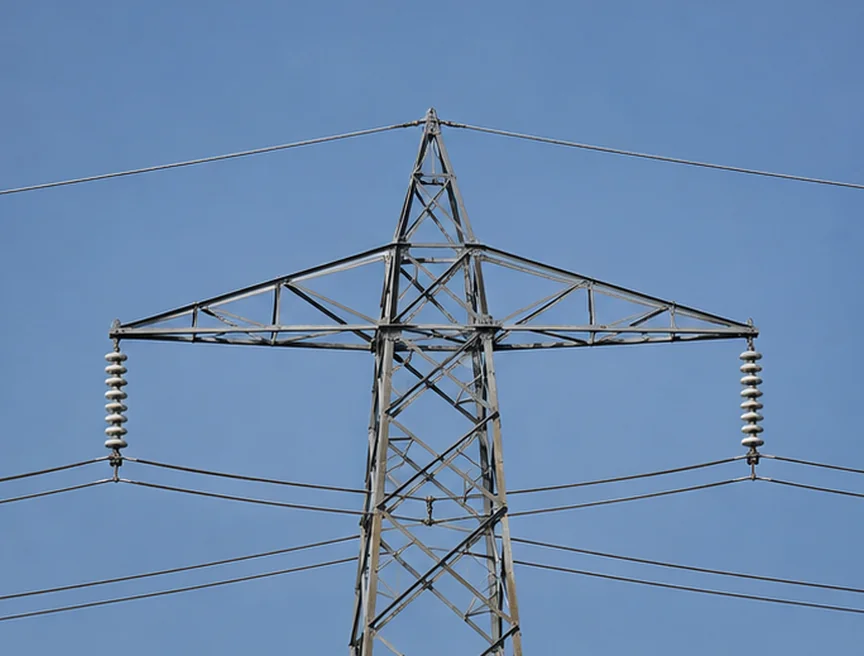
The thin wire at the very top of some transmission towers is a shield wire. It’s placed above the wires that carry power so it can intercept many lightning strikes. The wire is connected to grounded structures along the route.
Why put it higher up?
Think of a row of umbrellas above a picnic table. Their position gives them a better chance of catching what comes down from above. A shield wire does something similar for lightning. When it intercepts a strike, the current can travel through the grounded structure and into the earth.
Does that stop every outage?
Some lightning can still reach the lower wires. A strike to a tower or shield wire can also raise the tower voltage enough for a flash to jump across an insulator. Utilities account for those possibilities when they design the line and its grounding. That skinny top wire is one layer of protection doing a surprisingly big job.
For more on transmission tower design, grounding, and lightning protection, see Electric Transmission Systems Training.